

Iconic Outfits in Film
(It's long!)

We’ve been talking about doing a movie Substack for a while, and this time we’re finally doing it, plus, we’re bringing design into the mix. We picked our 4+4+4 favourite films with what we think are truly iconic outfits. Fair warning: Consider this a long read for people who really love movies. If that’s you, you’re officially one of us. Enjoy!
Valisia’s Picks
Juliet of the Spirits (1965)
by Federico Fellini
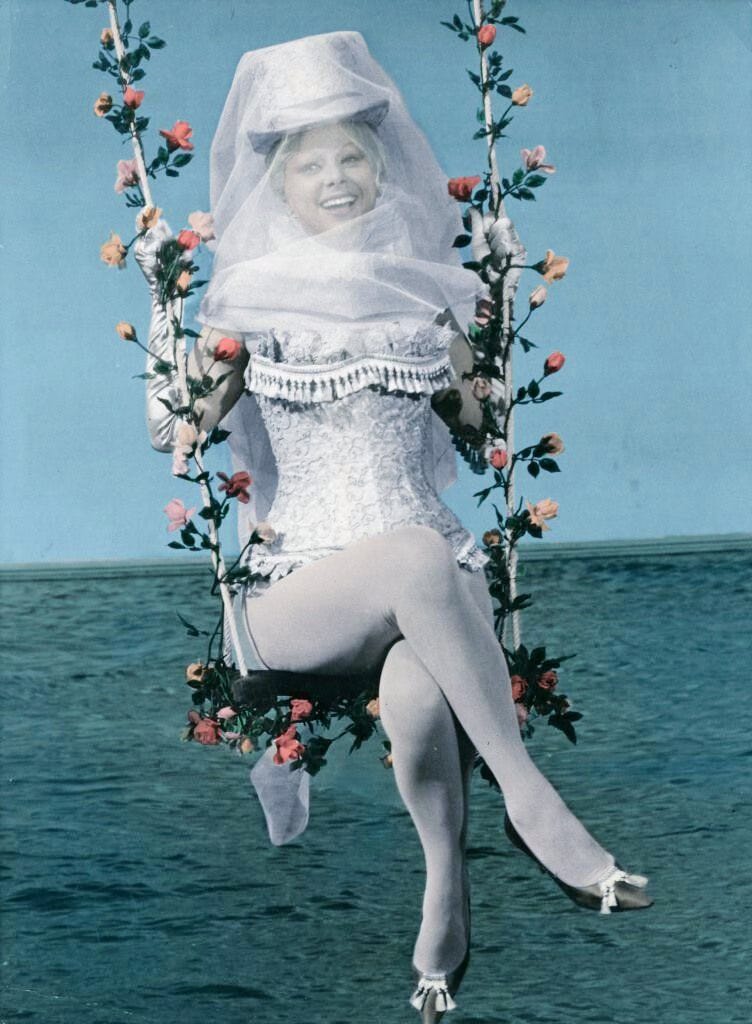
Fellini is actually one of my favourite directors. It is just incredible the way he blends fantasy and baroque images with earthiness. Ranking his films, however, feels beside the point. But if there’s one film that keeps haunting me through fabric, colour, and interiors, it’s Juliet of the Spirits.
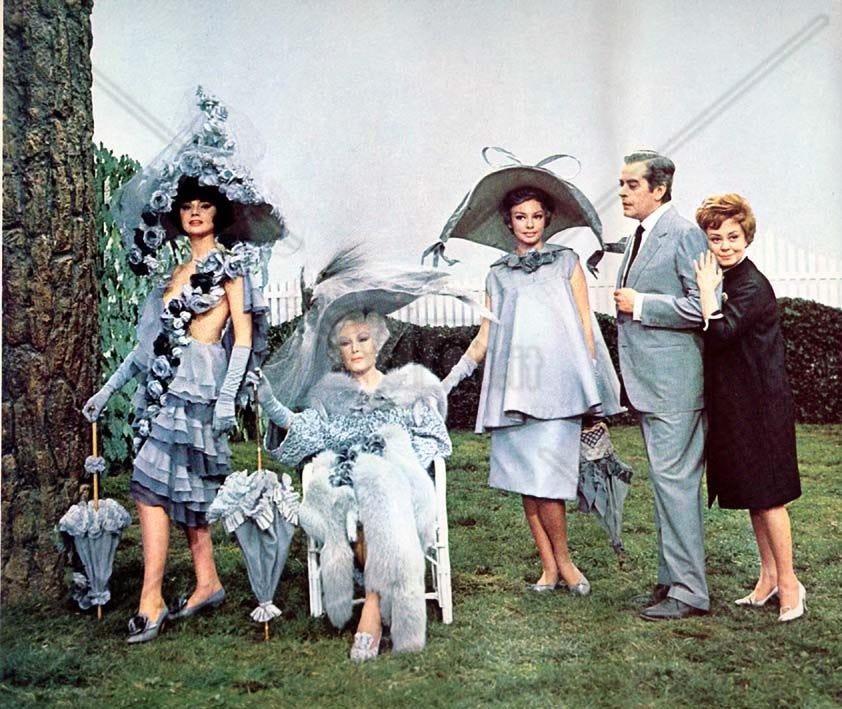
This was Fellini’s first experiment with colour, and understatement has no place here. The result is unapologetically eye-popping. Working again with Piero Gherardi on sets and costumes — except for Giulietta Masina’s deliberately restrained wardrobe, designed by Fellini himself — the film explodes into Technicolour delirium. Oversized picture hats, clouds of chiffon and tulle, feathers, silk, ruffles everywhere. Gherardi didn’t adapt to colour; he attacked it.
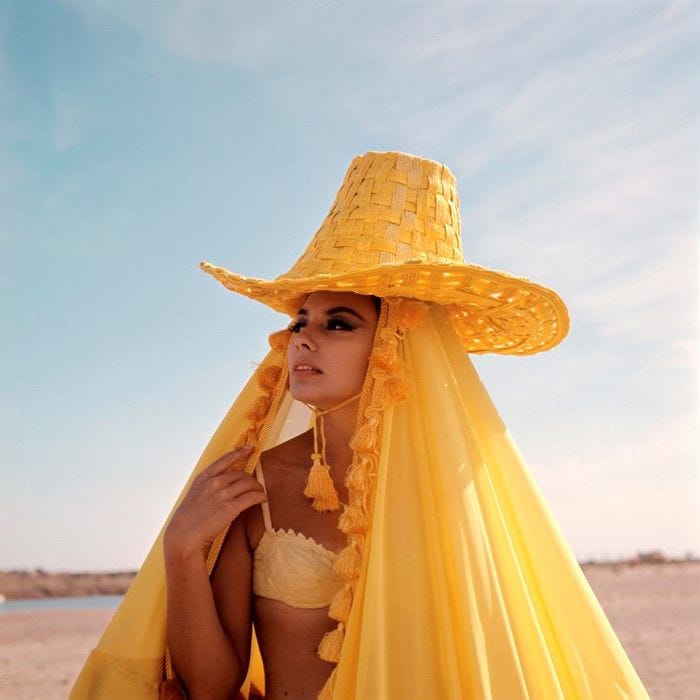
The effect is a sumptuous visual overload that gently mocks Italy’s love affair with fashion, turning style into playful caricature.


And yes, my own wardrobe lives firmly in the realm of black. But vivid colour in cinema is cult, joyful, and slightly intoxicating. A reminder that fashion on screen doesn’t have to be wearable to be unforgettable.
Death Becomes Her (1992)
by Robert Zemeckis
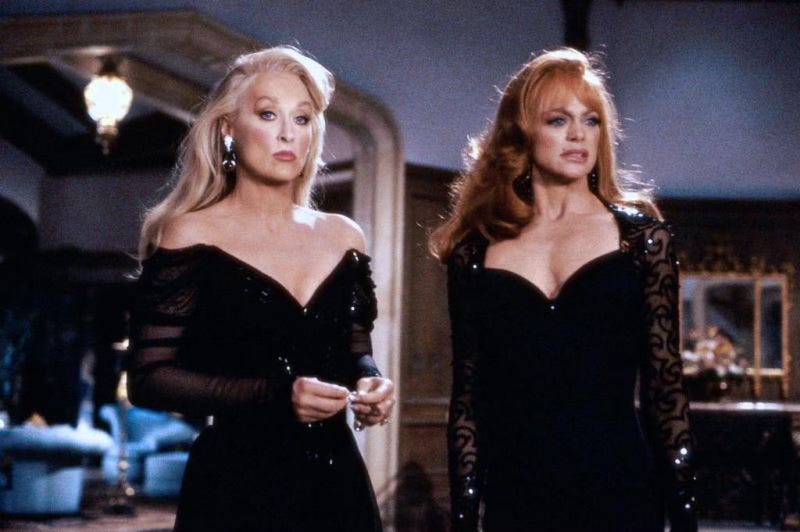
What a masterpiece! A perfect collision of camp and comedy, with just enough existential depth to make you briefly philosophical about mortality, youth, and the exhausting urge to want more - before you remember you’re here for the outfits.
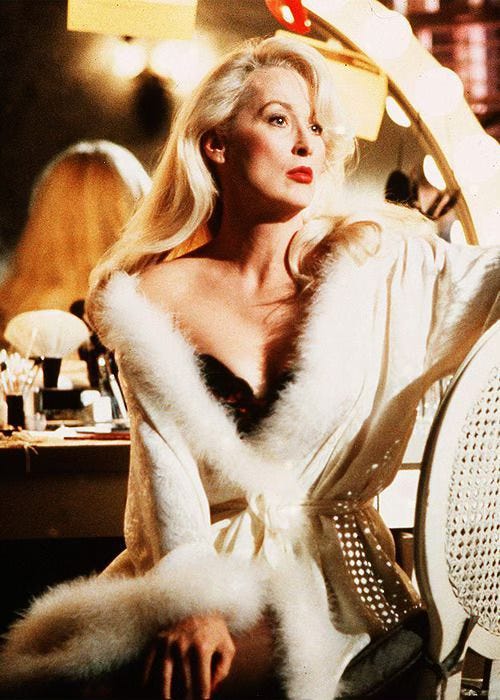
A quintessential 90’s blockbuster, glossy and excessive in that unmistakably rich way the decade did so well. Everything looks expensive, sharpened, and slightly cruel. Meryl Streep and Goldie Hawn move through the film wrapped in glamour that flirts openly with Old Hollywood, all sculpted silhouettes, theatrical draping, and clothes that feel designed to be worn while winning — or destroying — a room.
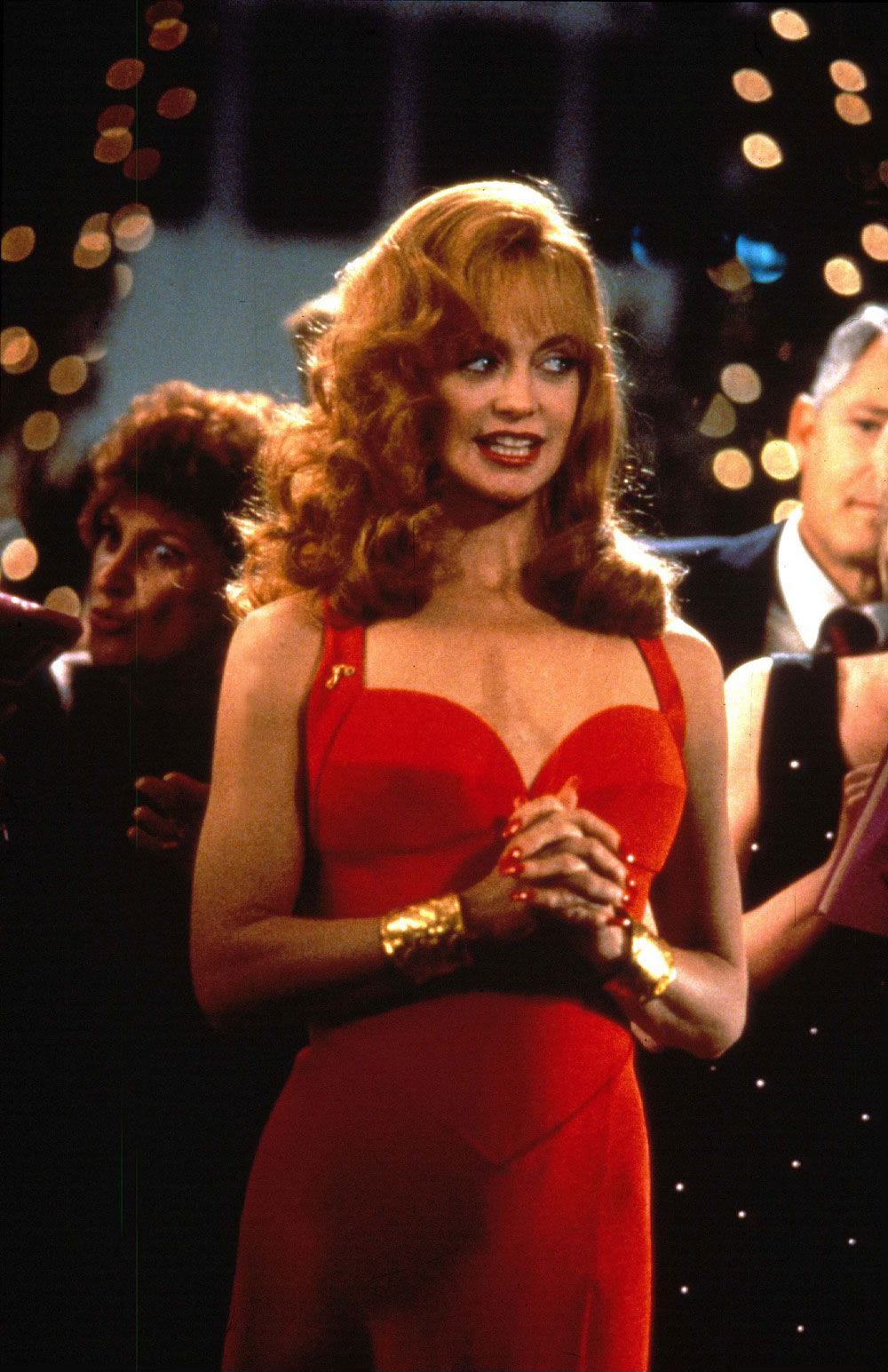
The iconic 90’s skirt suits deserve their own credit: sharp, powerful, immaculately styled, radiating wealth, ambition, and carefully maintained hostility. This is femininity as a weapon, perfectly tailored.
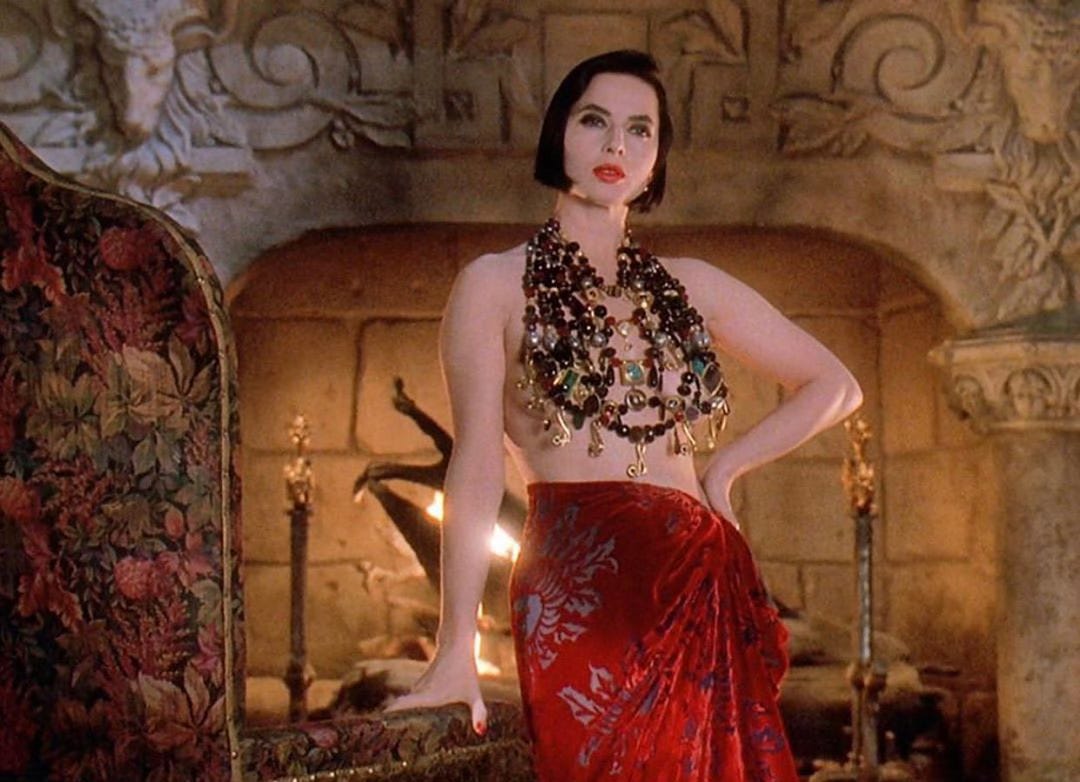
And then Isabella Rossellini appears. Untouchable. Otherworldly. Pure erotic authority. She achieves all of this wrapped in outfits that are almost non-existent, yet impossibly lavish. Her power lies precisely in how little she wears and how much presence it carries.
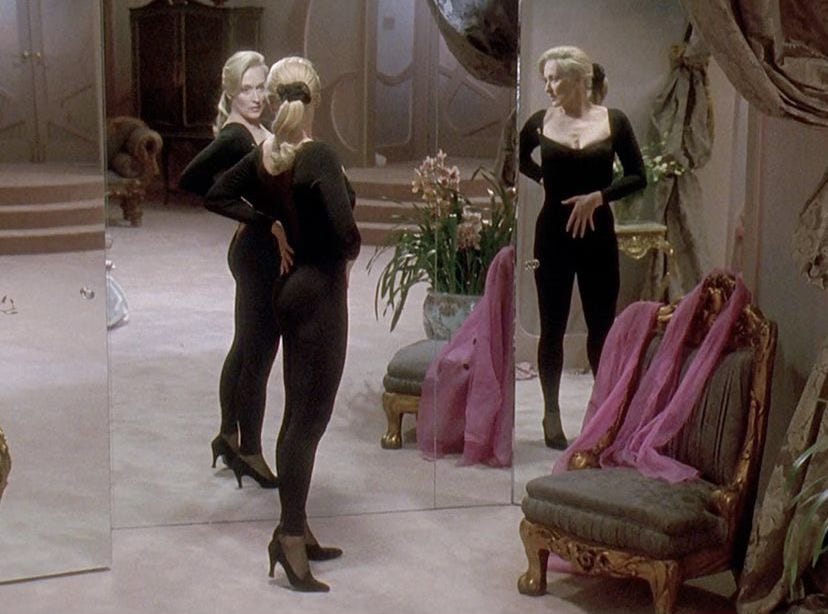
Death Becomes Her understands that fashion, like immortality, is about illusion, and the 90’s never looked more delicious doing it.
Beetlejuice (1988)
by Tim Burton
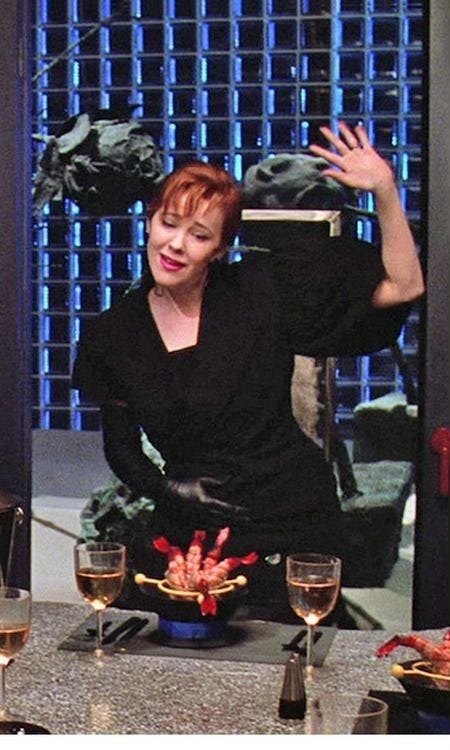
Some films don’t just age well, they define an aesthetic vocabulary. Beetlejuice is one of them. A perfect Tim Burton fever dream, balancing the macabre with absurd humour, turning death into something strangely playful and suburbia into a gothic playground.
And then, there are the clothes. Gothic glamour runs through the film, but it’s never divorced from its moment. These are unmistakably 80’s outfits, exaggerated and stylised, yet grounded in a very real fashion sensibility. Darkness here isn’t minimal, it’s theatrical, expressive, and often delightfully excessive.
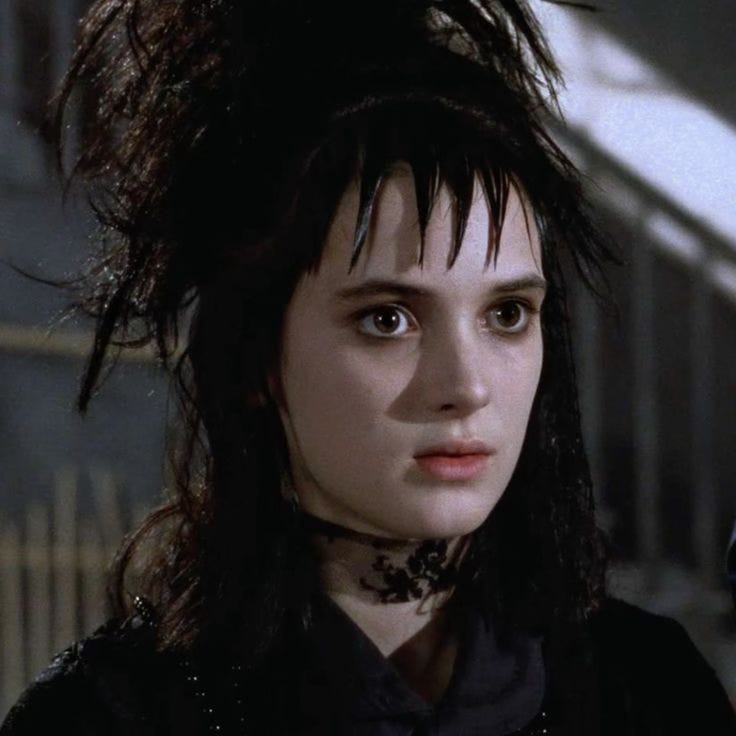
Winona Ryder’s Lydia Deetz remains one of modern cinema’s most memorable goth girls. Ryder is perhaps the only actress capable of making spiky, widely spaced bangs look chic, and she brings an unexpected sweetness to a character that could have easily slipped into cliché. Her black dresses aren’t just costumes; they’re emotional armour.
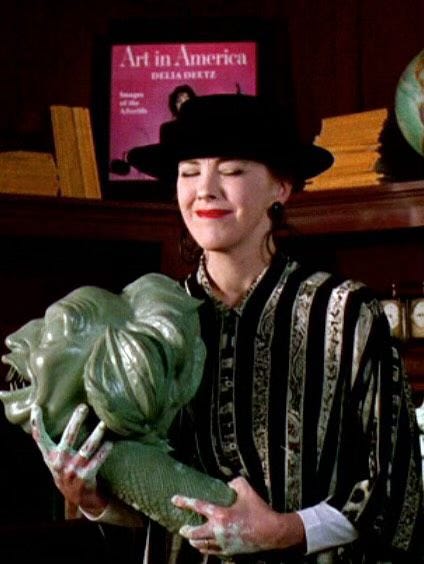
Delia and her circle, meanwhile, look as though they’ve stepped straight out of an avant-garde 80’s magazine spread: draped frocks, oversized earrings, sculptural silhouettes, swirled hair.
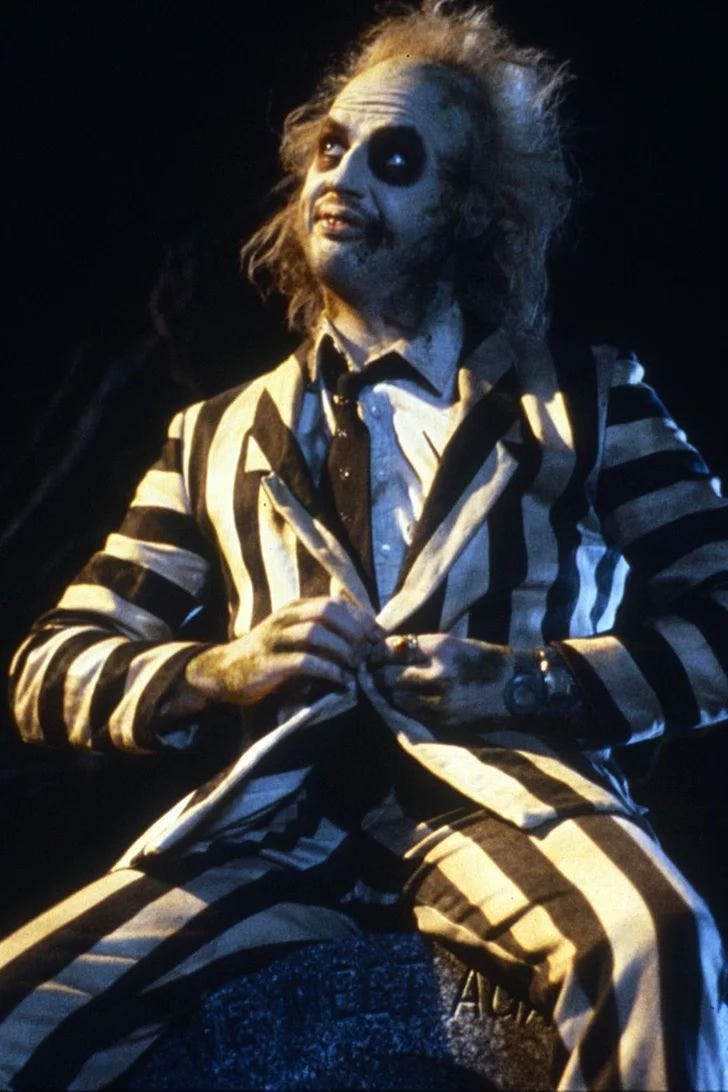
And then there’s Beetlejuice himself. That black-and-white striped suit is pure visual genius. It is grotesque, it is graphic, it is instantly recognisable. Less an outfit than a warning sign. Chaos, but make it tailored.
Beetlejuice isn’t just iconic; it’s personal. Its aesthetic hits every note for me: gothic, 80’s, playful, theatrical, and deeply stylish. A film that understands that fashion, like the afterlife, should never be boring.
The Wild One (1953)
by László Benedek
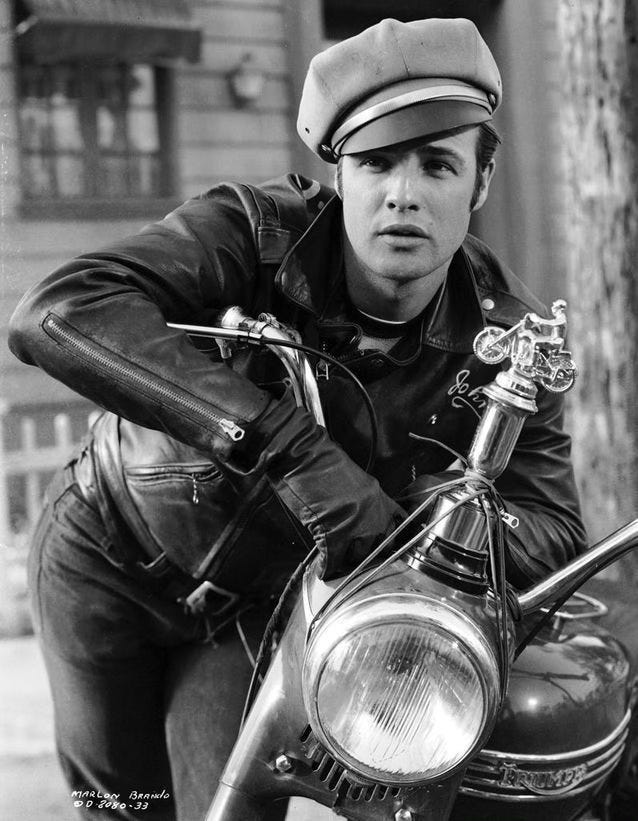
Some films arrive and suddenly the world stands differently. The Wild One did exactly that. Marlon Brando’s Johnny Strabler crystallised the 1950s rebel archetype: restless, confrontational, emotionally sealed off, leather-clad. The film didn’t merely depict a biker gang; it defined the outlaw biker genre and sent shockwaves through youth culture, leaving behind a visual legacy that still feels charged.
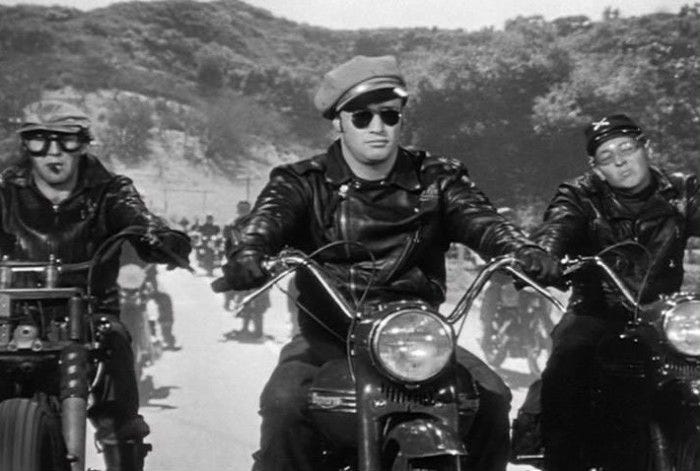
The fashion is deceptively simple and therefore unstoppable. The Wild One introduced what would become the uniform of the American rebel: the Perfecto leather jacket, Levi’s jeans, high-top boots, the cap worn at just the right angle. Functional, unfussy, and loaded with attitude. No decoration, no excess, just clothes that signal defiance without explanation.
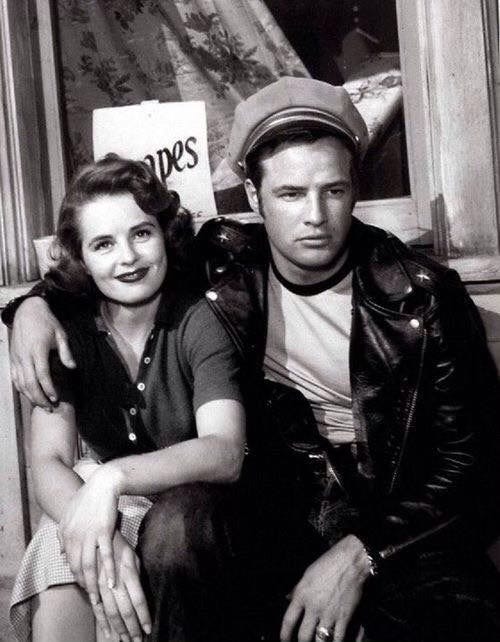
This is fashion as refusal. Anti-polish, anti-authority, anti-ornament. A look that doesn’t ask to be admired, yet inevitably is.
And this is precisely why I’m in love with it. Rebellion and leather jackets are, essentially, what I am. Not as costume, but as instinct. Leather jackets have always been a symbol of effortless style. They’re instantly recognisable and impossible to ignore. When you wear a leather jacket the proper way, you exist outside the rules, and you do it elegantly.
Alexandra’s Picks
Belle de Jour (1967)
by Luis Buñuel
I’ve always loved Belle de Jour for the outfits. Catherine Deneuve as Séverine is this pristine, bored bourgeois wife with a Rolodex of fantasies she can’t quite reconcile with her impeccable Parisian apartment (grand piano and maid included). Naturally, she solves this by becoming a high-end sex worker… strictly between lunch and dinner.
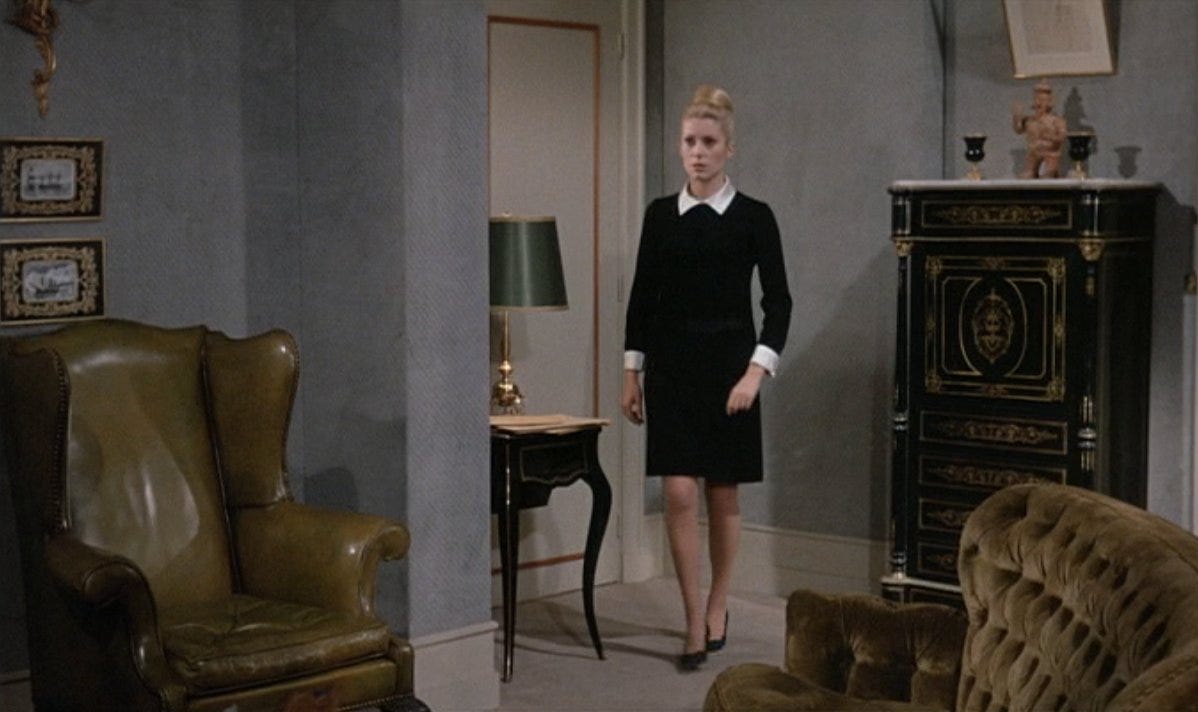
Yves Saint Laurent just gets repression: soft, neutral knits and those pilgrim-y patent shoes when she’s being “good wife,” sharp lines and confrontational textures when she’s doing her own thing.


Tennis whites with a headband give way to a black rubber mac, then to that infamous black dress with ivory satin cuffs. At Madame Anaïs’s brothel, she arrives in a militaristic coat and dark sunglasses, while her white lace lingerie sets her apart from her peers, as both virgin and whore.
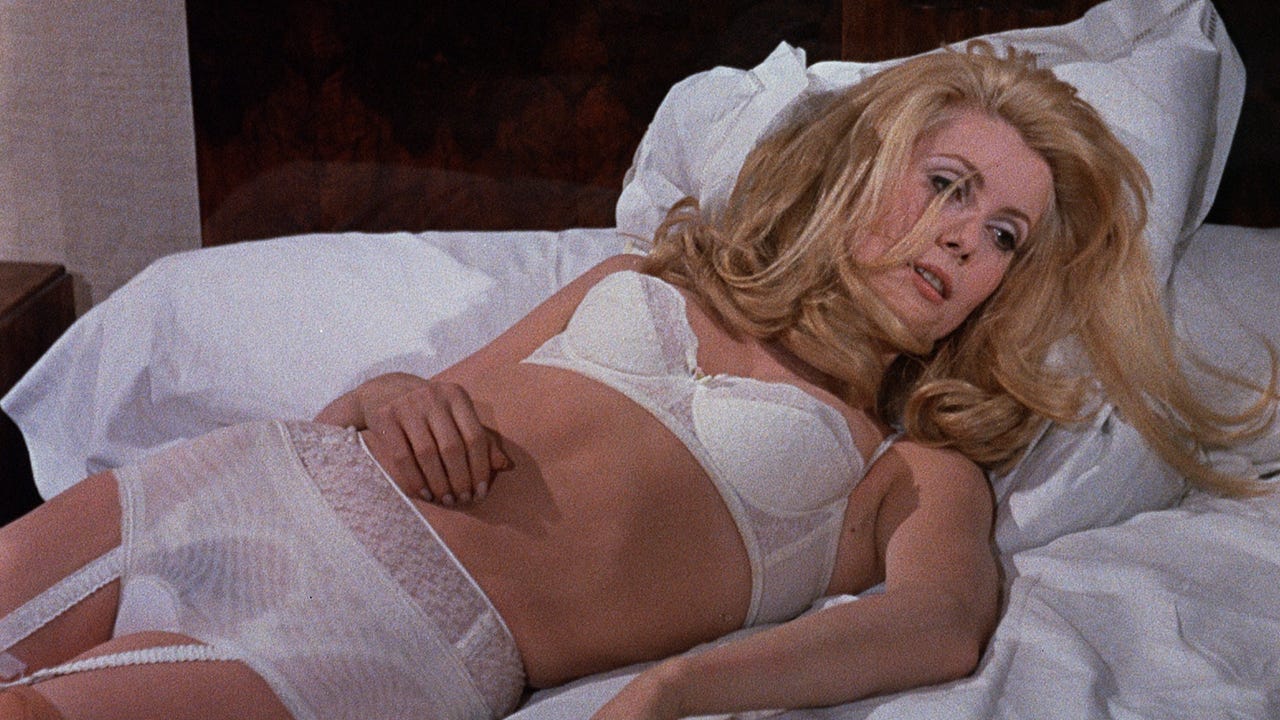
Her fantasies are insane; she’s scarlet, she’s white, she gets mud thrown on her, insults, the whole thing. The pilgrim dress at the end seals it: pious and deeply i(r/c)onic.
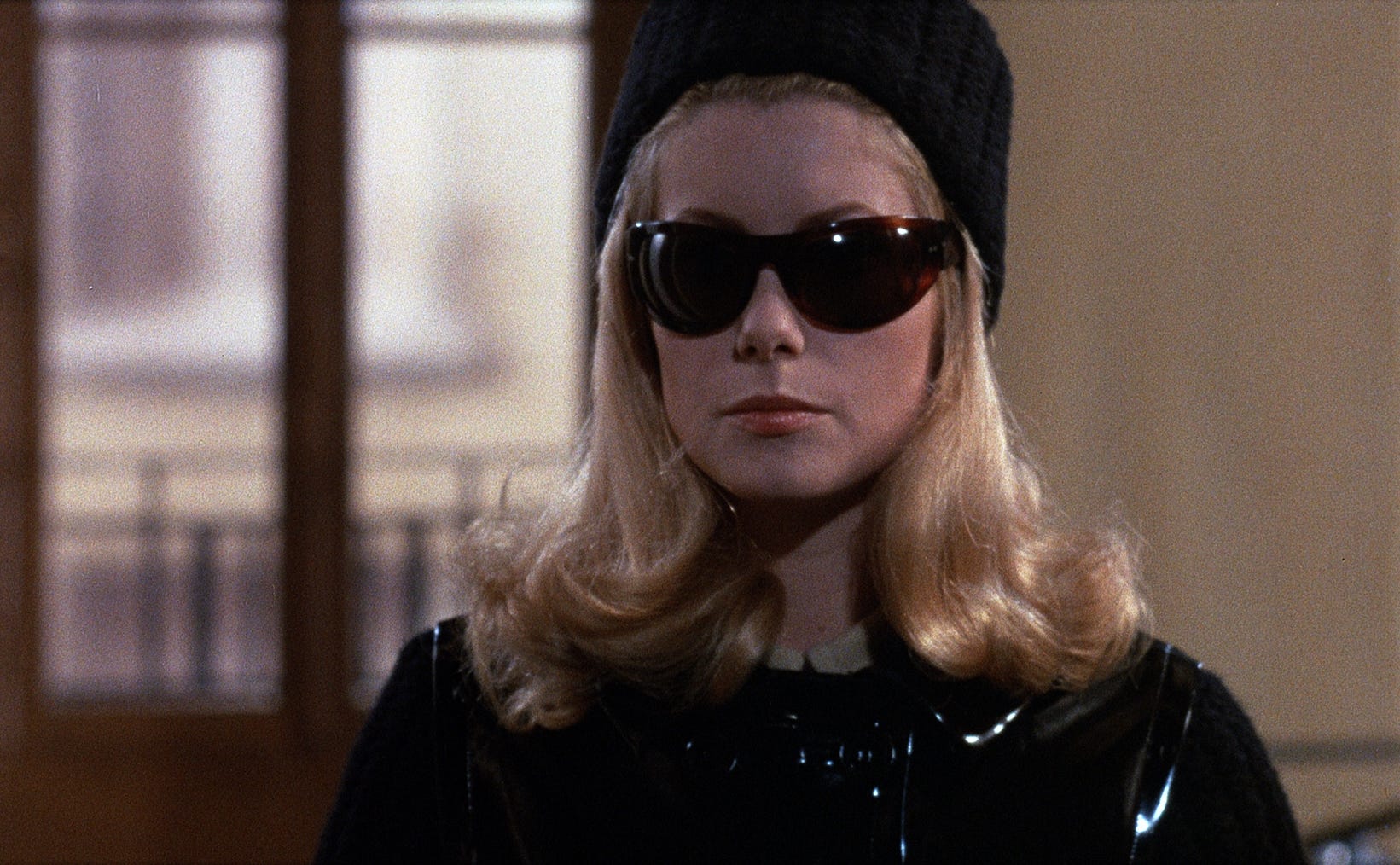
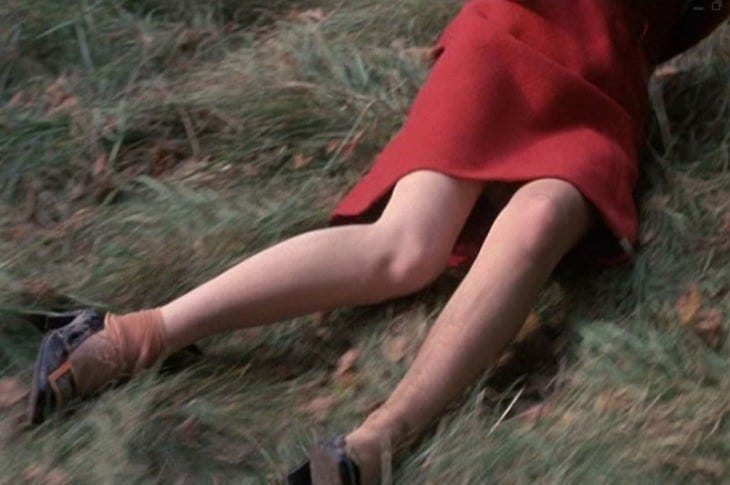
The fantasy never leaves; it just gets better clothes.
Doom generation (1995)
by Gregg Araki
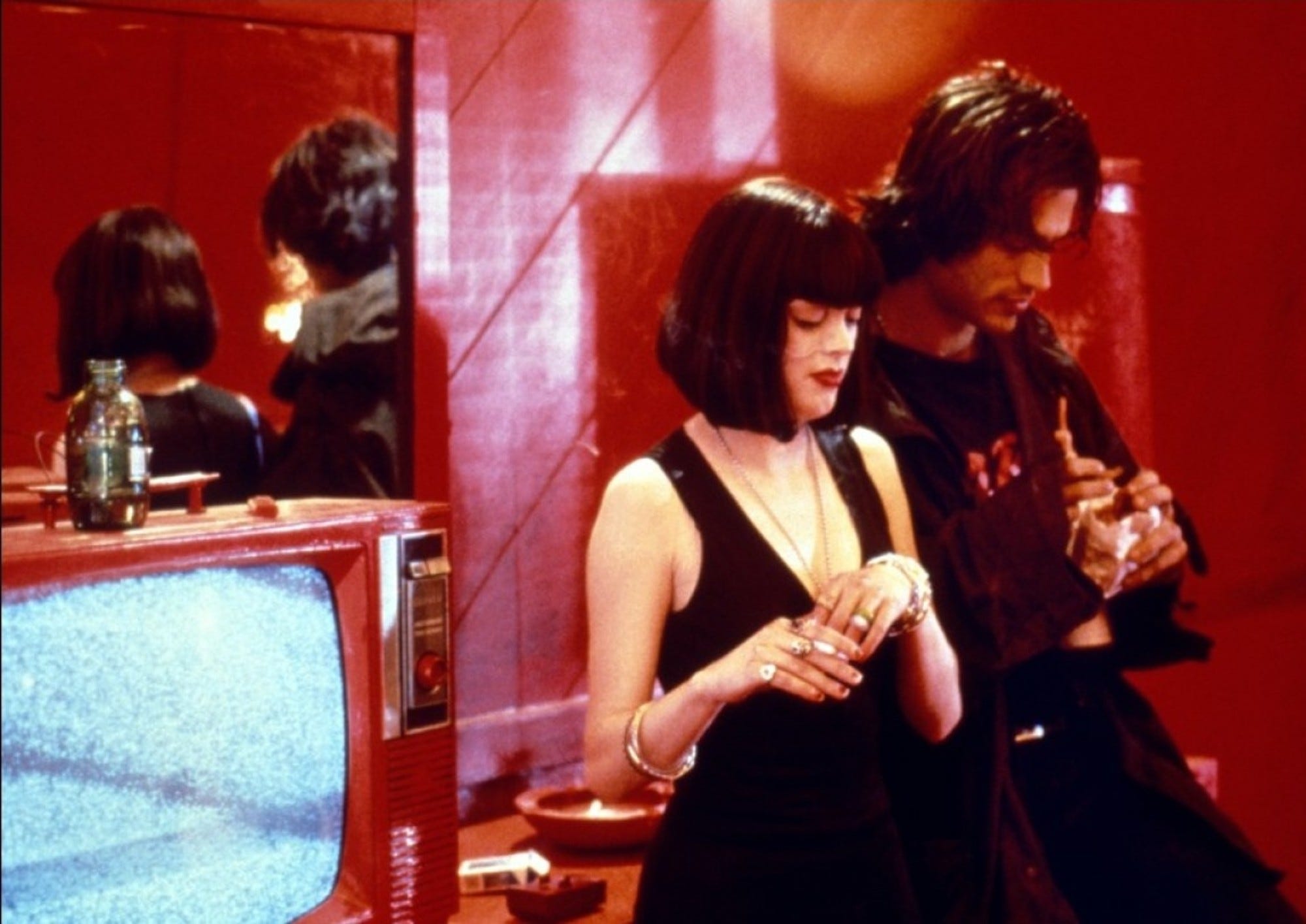
I’ll never get over how good ’90s fashion aesthetics look in films. The Doom Generation is exactly this sharp-tongued, hyper-sexual, and gleefully offensive film. Amy Blue (Rose McGowan), her boyfriend Jordan, and chaotic hitchhiker Xavier Red just… rip across America after accidentally killing someone in a convenience store. Everything escalates from there, fast and feral.


Style-wise, the film conjures iconic looks out of almost nothing. The ultimate alt-teen uniform, distilled: leather jackets, band T-shirts, Dr. Martens, and bits of vintage Americana. McGowan, just sixteen at the time, plays Amy as a barely fictionalized version of herself: narcissistic, untouchable, grunge to the bone.
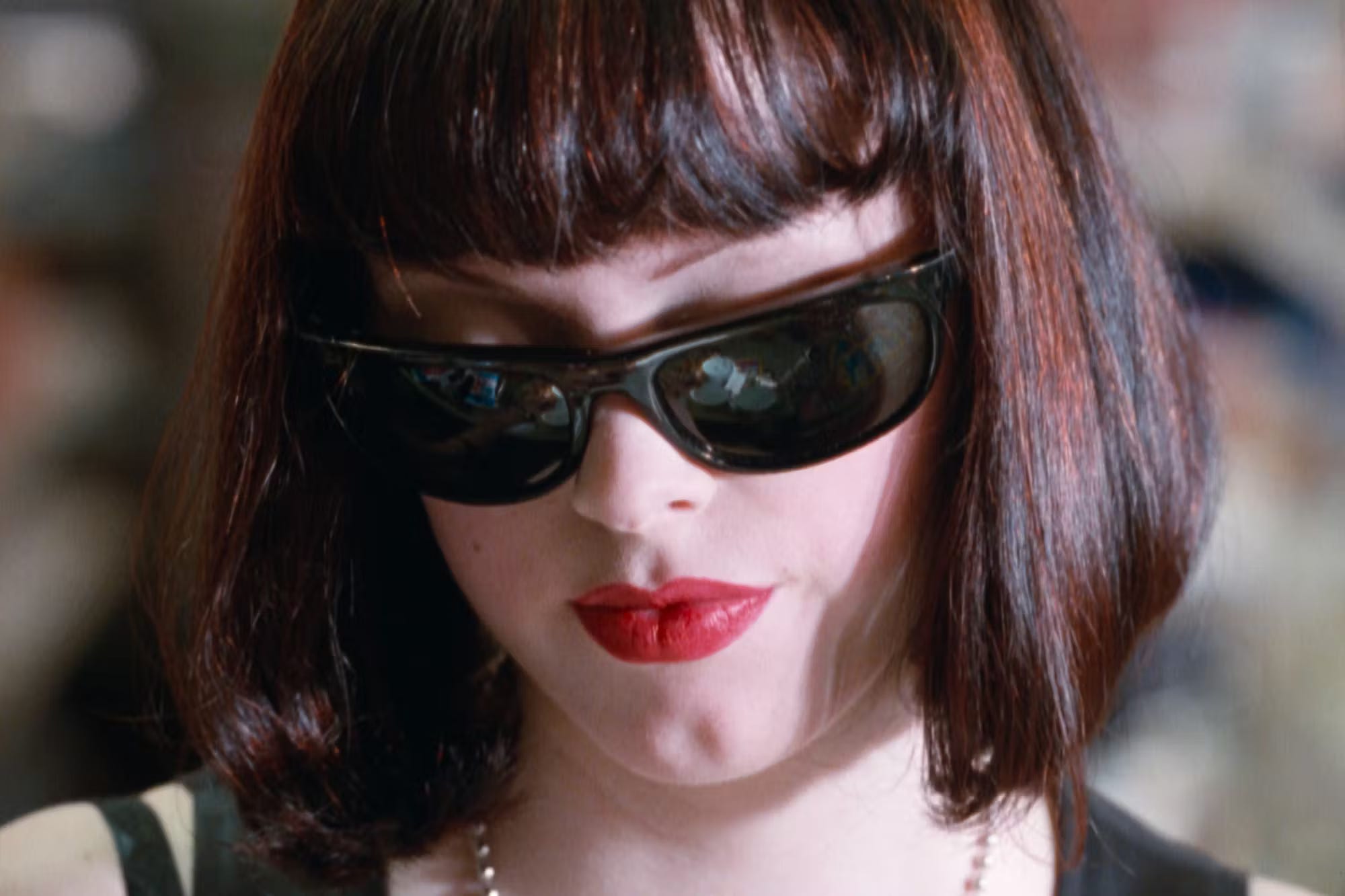
Amy’s beauty look never changes - sleek black bob, red lipstick, cat-eye black sunglasses (yes, it reminds me of me, which is why I love her).
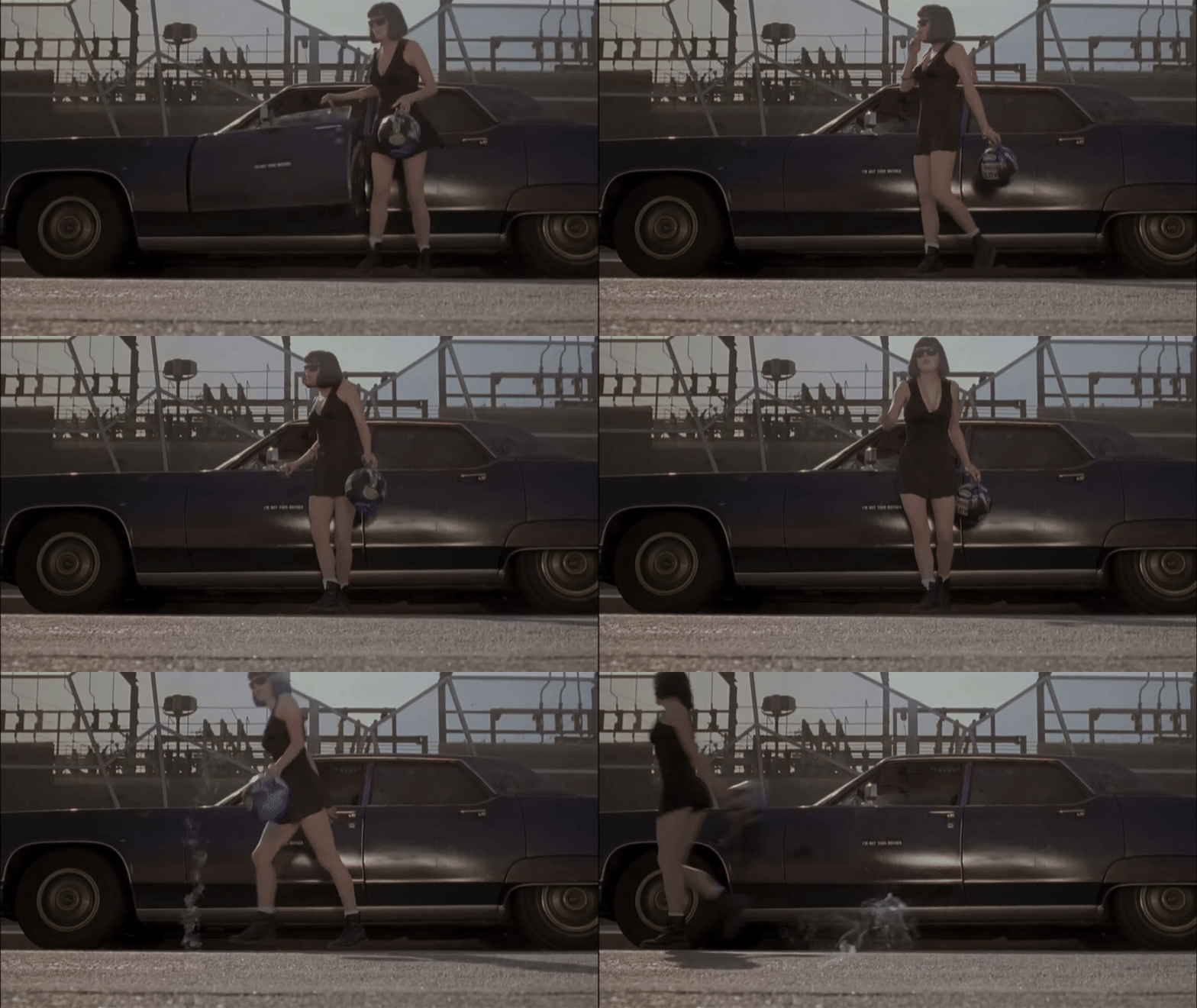
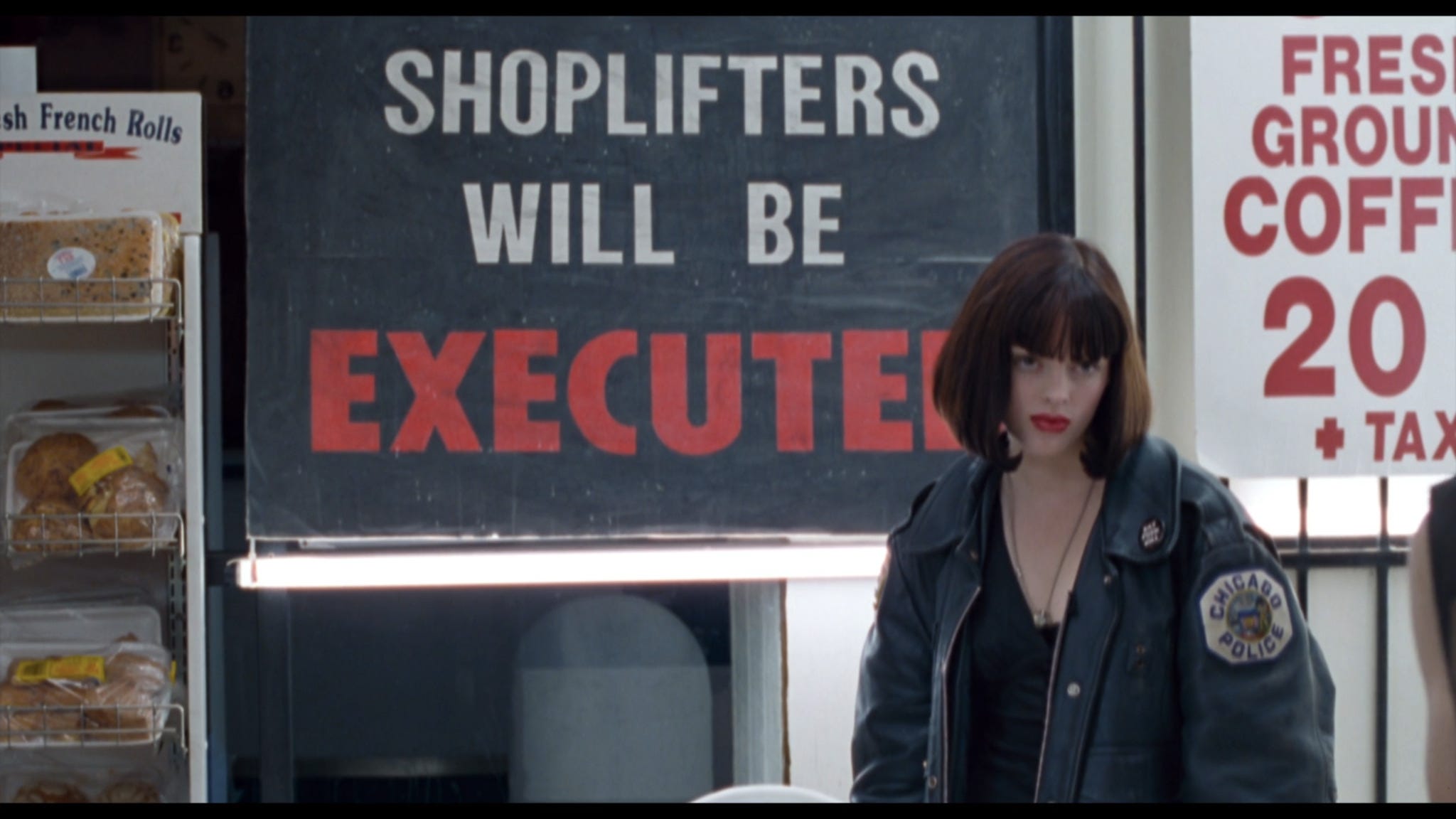
Her most bad-ass look is a deep-cut black mini dress layered under an oversized Chicago police jacket; a style she wears for much of the film before switching into a pastel pink vintage sundress.
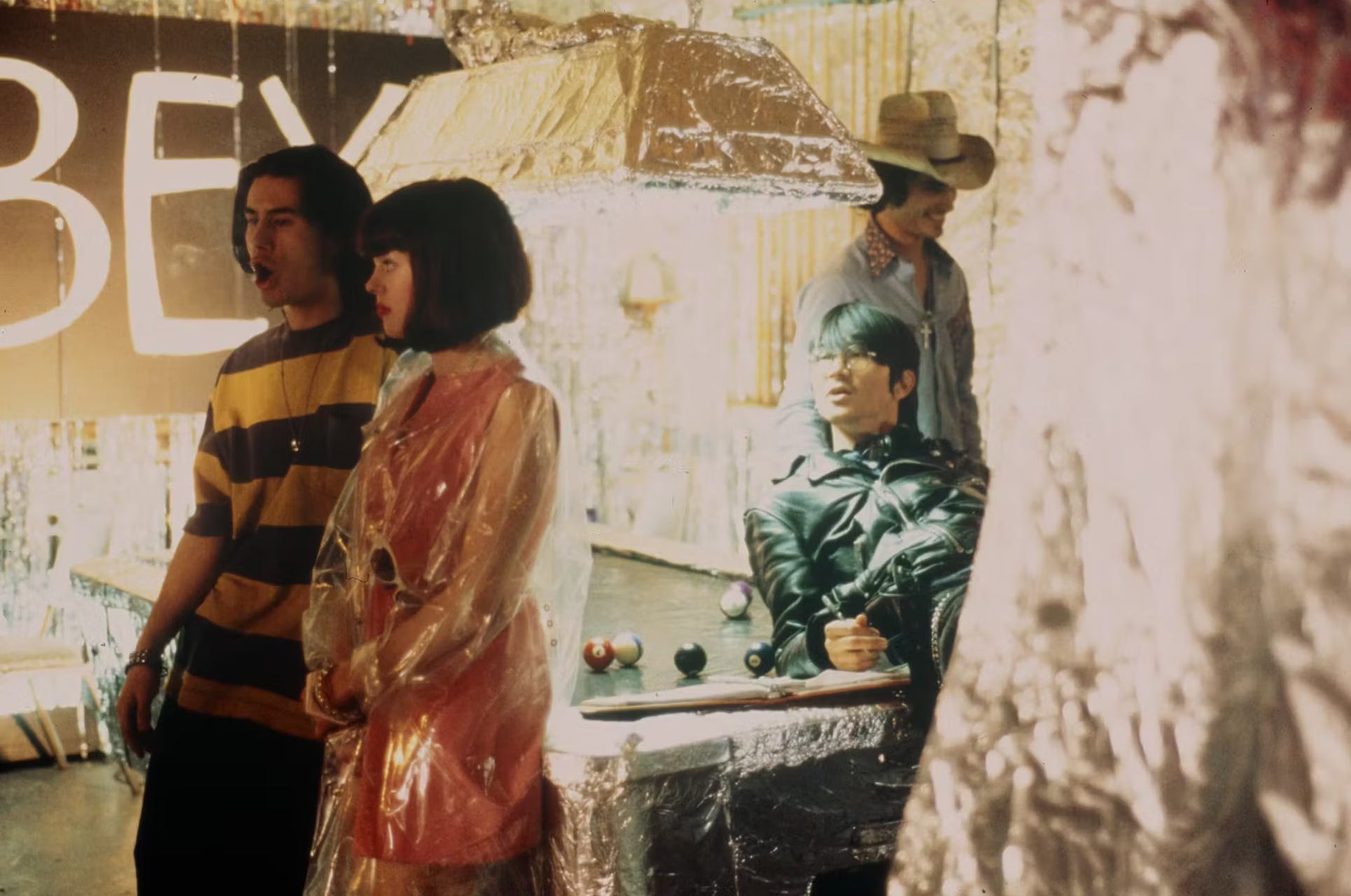
This dress marks a turning point, visually signaling the trio’s transformation before things spiral into darkness. And then there’s the transparent plastic raincoat, cute at first but deeply unsettling. In movies like this, plastic raincoats are always a warning. Araki knew it. American Psycho, five years later, would too.
Double Indemnity (1944)
by Billy Wilder
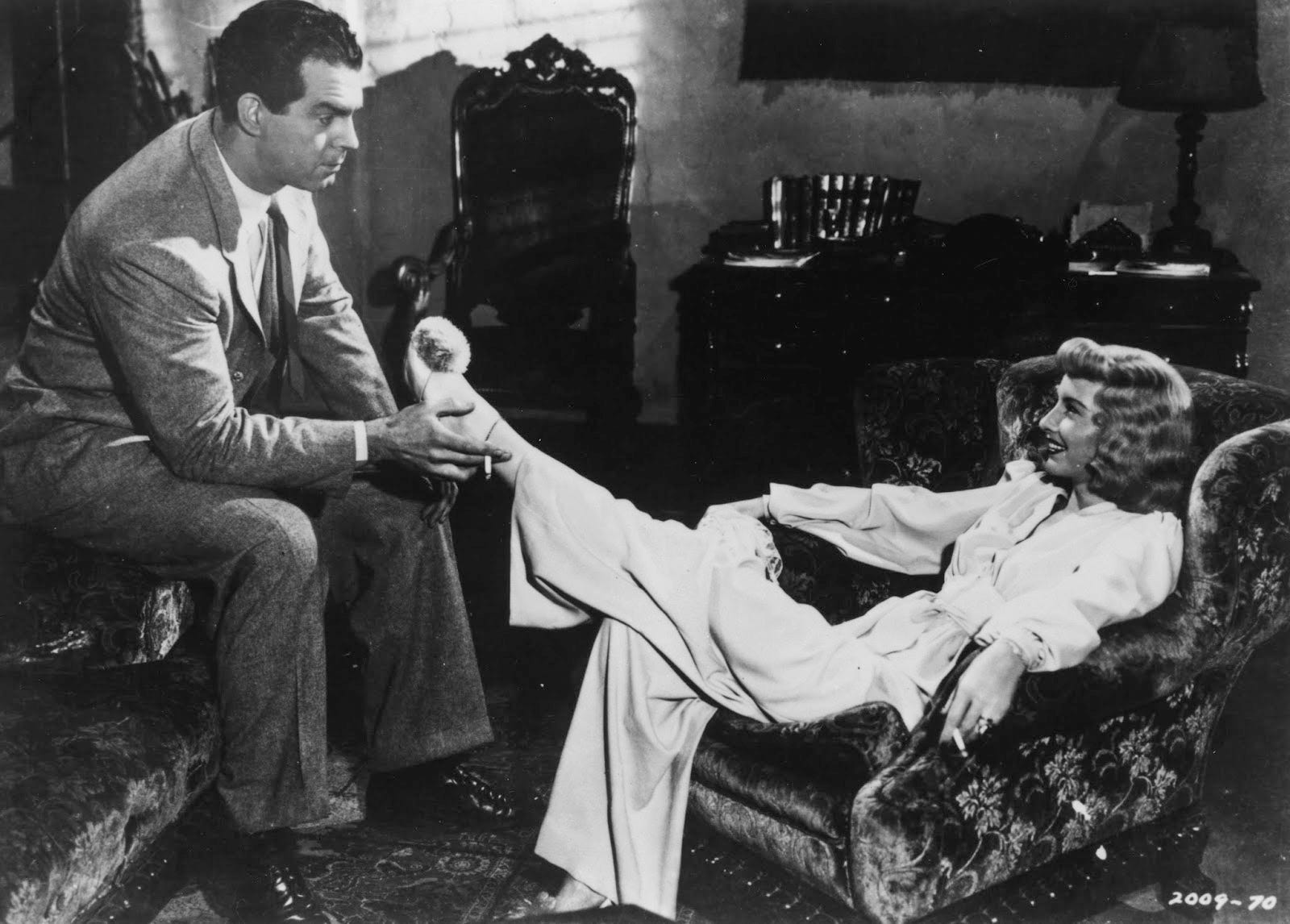
Barbara Stanwyck as Phyllis Dietrichson is everything I want in a femme fatale/chic sociopath. She walks in wearing a white jumpsuit, a perfect ’40s tailoring with nipped waist and sharp trousers, and it feels incredibly ahead of its time. Plus the total-white while actively scheming, is simply genius. Her style is this weird balance between ultra-feminine and slightly androgynous, which only makes her more unnerving.
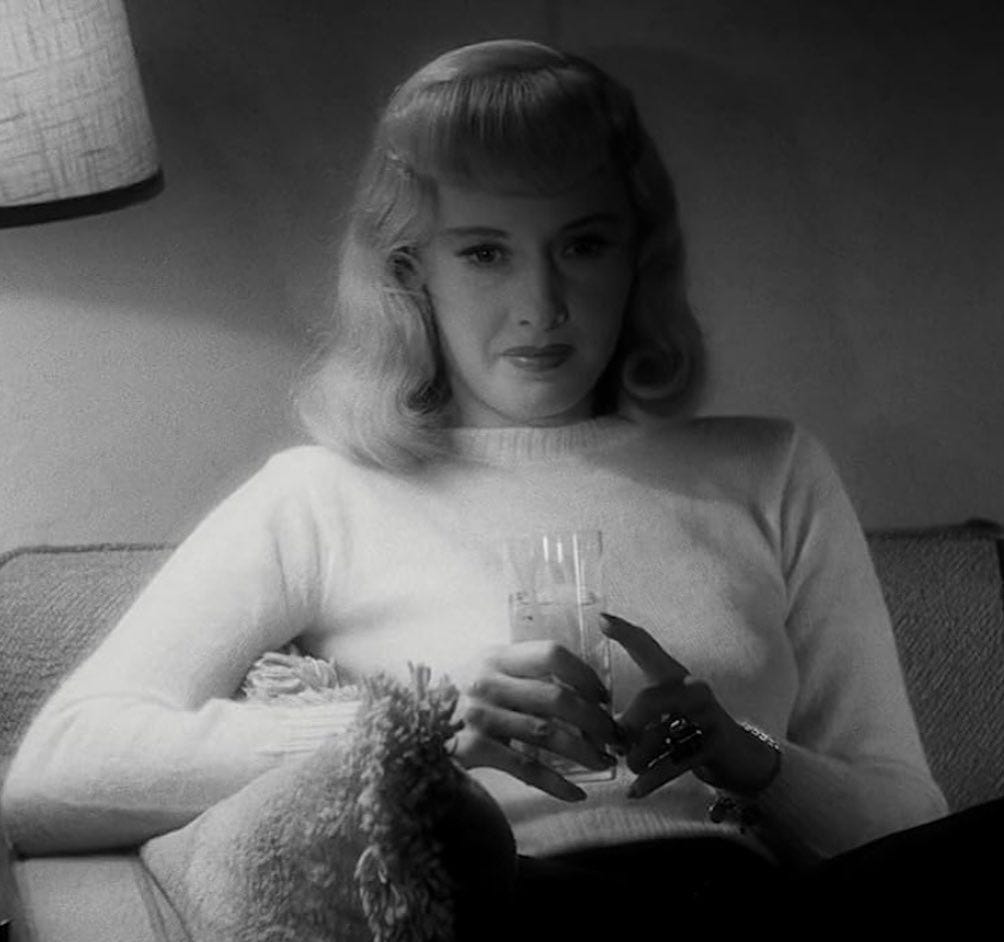
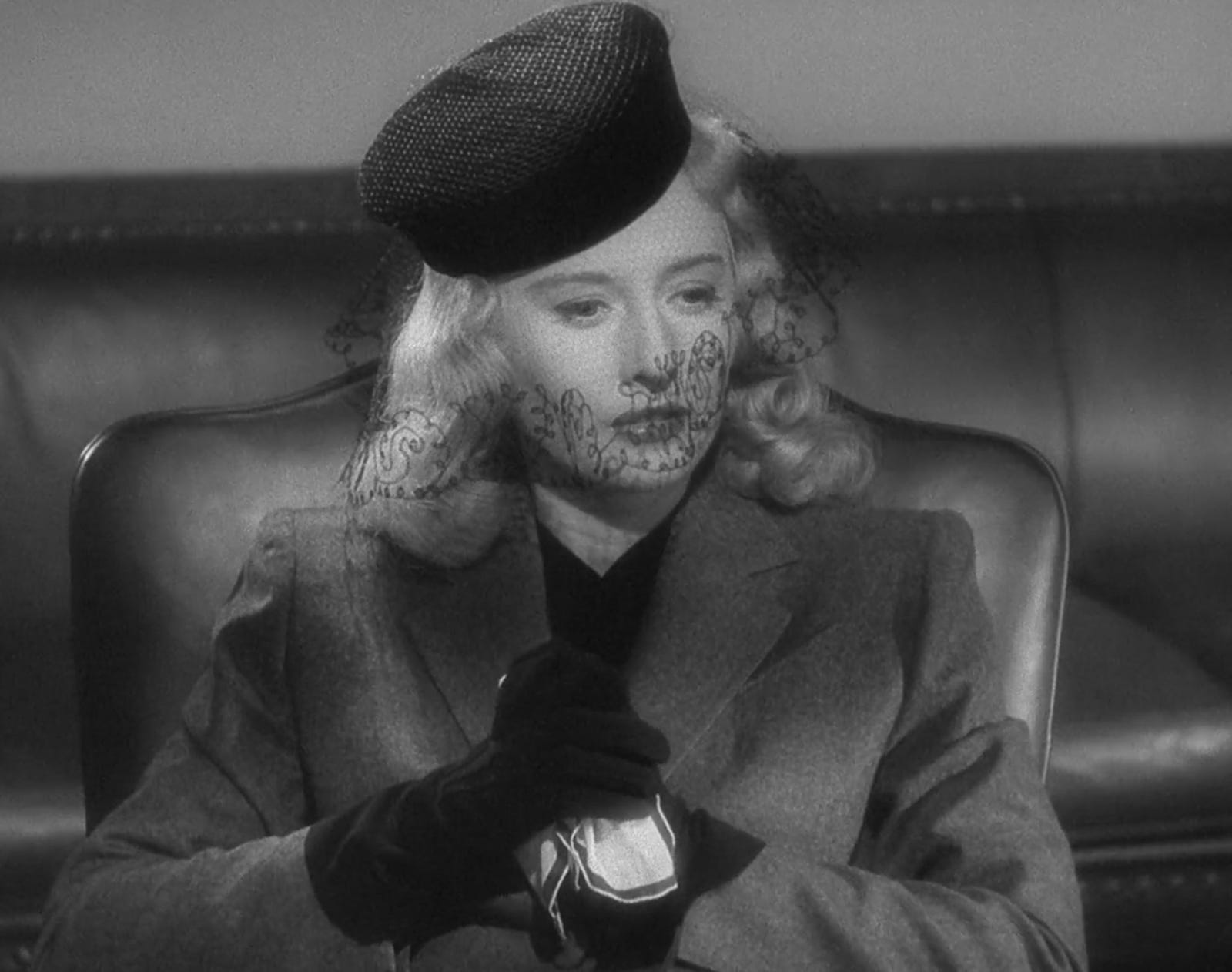
Phyllis is motivated by money (she loves it, spends it, wants more of it), so Edith Head lets the clothes reflect that. Jewellery becomes a character trait. She wears expensive day gowns, silk shirtdresses with ruffled fronts, plunging necklines and billowed cuffs, sharply belted at the waist, but everything is classically cut, almost prim. Like she’s playing dress-up as the “good wife” to better camouflage her moral rot.


And when she’s trying to play it safe (see the grocery store scene), Phyllis strips things back: tailoring, pencil skirts, notch-lapel coats, heavy wools, white shirts, high-waisted trousers.
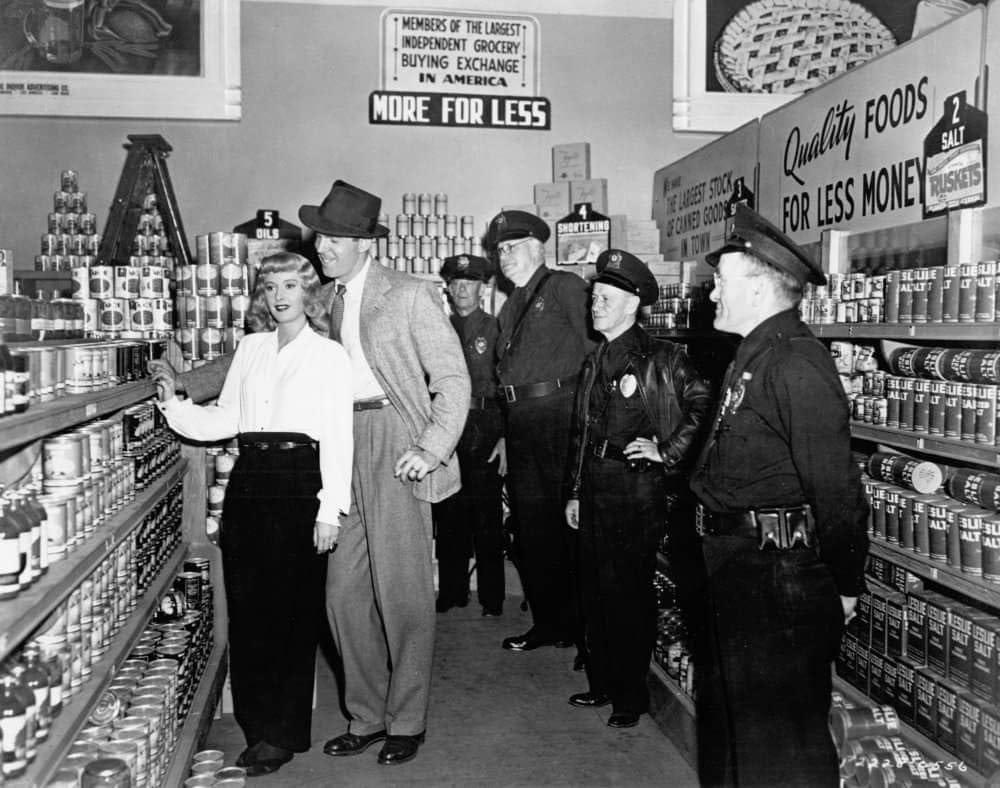
Clothes that still feel remarkably relevant today. Which makes it even harder to believe that although Double Indemnity racked up seven Oscar nominations, Edith Head didn’t take home the statue for costume design.
Natural Born Killers (1994)
by Oliver Stone
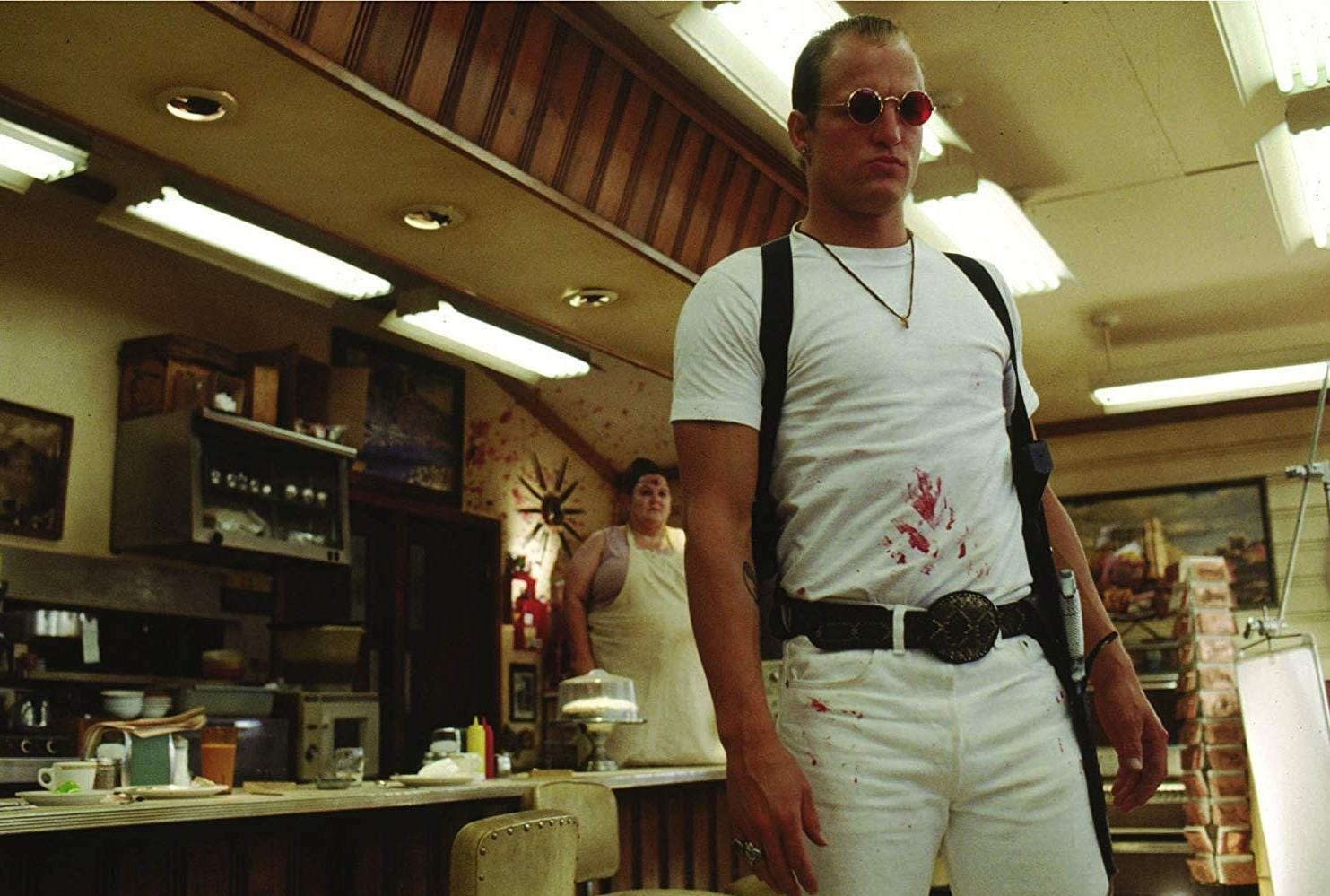
Easily one of my favourite best-dressed runaway couples in cinema. Husband-and-wife Mickey and Mallory Knox are couple goals; happy-go-lucky serial killers on the road, looking effortlessly dangerous.
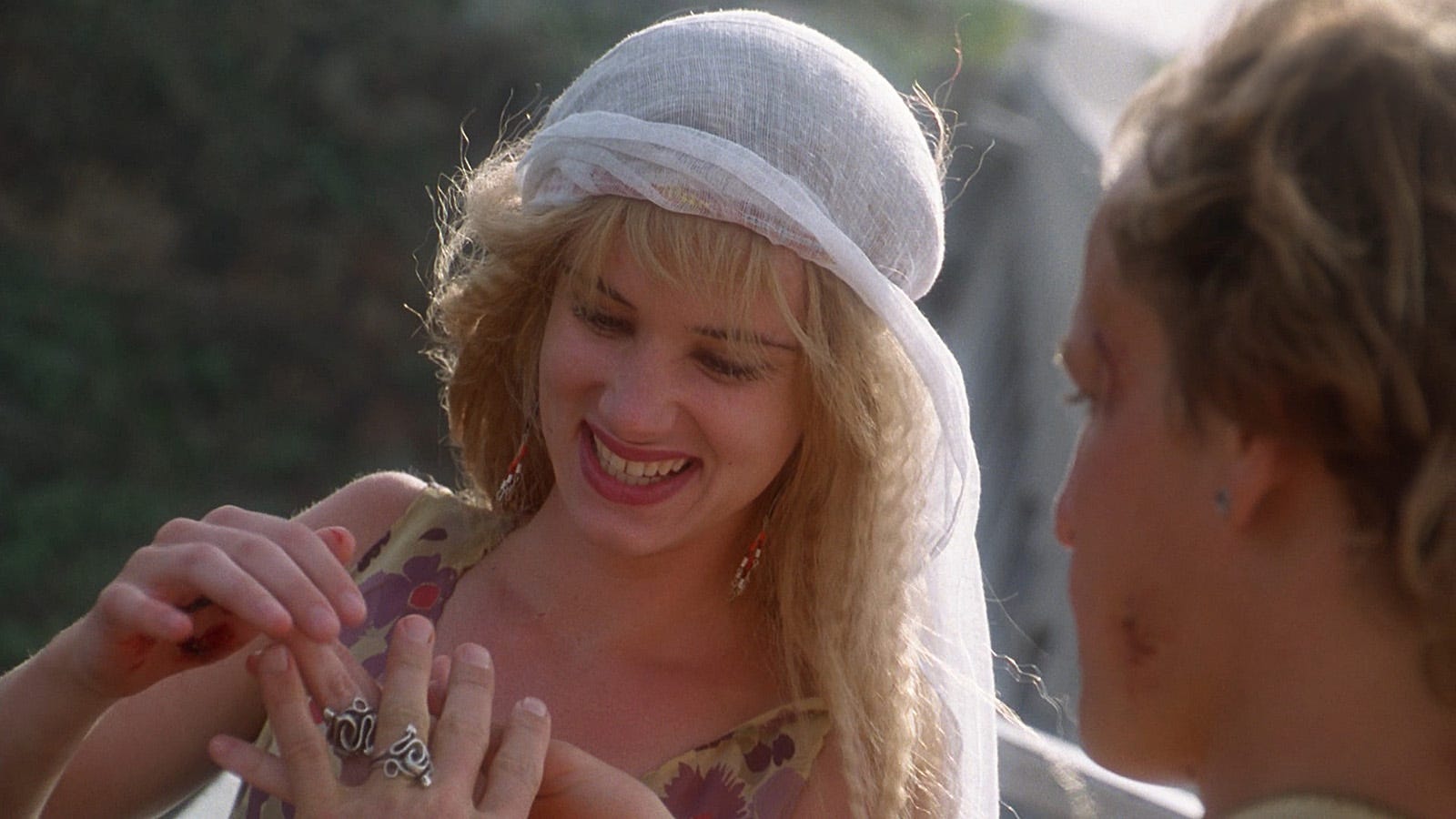
Style-wise, let’s start with the wedding rings, which are twin coiled snakes. Nasty. (Snakes show up again on Mickey’s cowboy boots and as a tattoo; Mallory opts for a scorpion at her waist.)


But for me (and probably most people), the most recognizable scene is the one with them leaning on a red-hot convertible. Mickey wears a sheer red T-shirt, tight Levi’s, a western belt buckle, a leather jacket thrown on top, and aviators. Mallory is dressed all in red: mini crop top, belted jeans, and a scarf tied around her neck. I love this colour coordination.
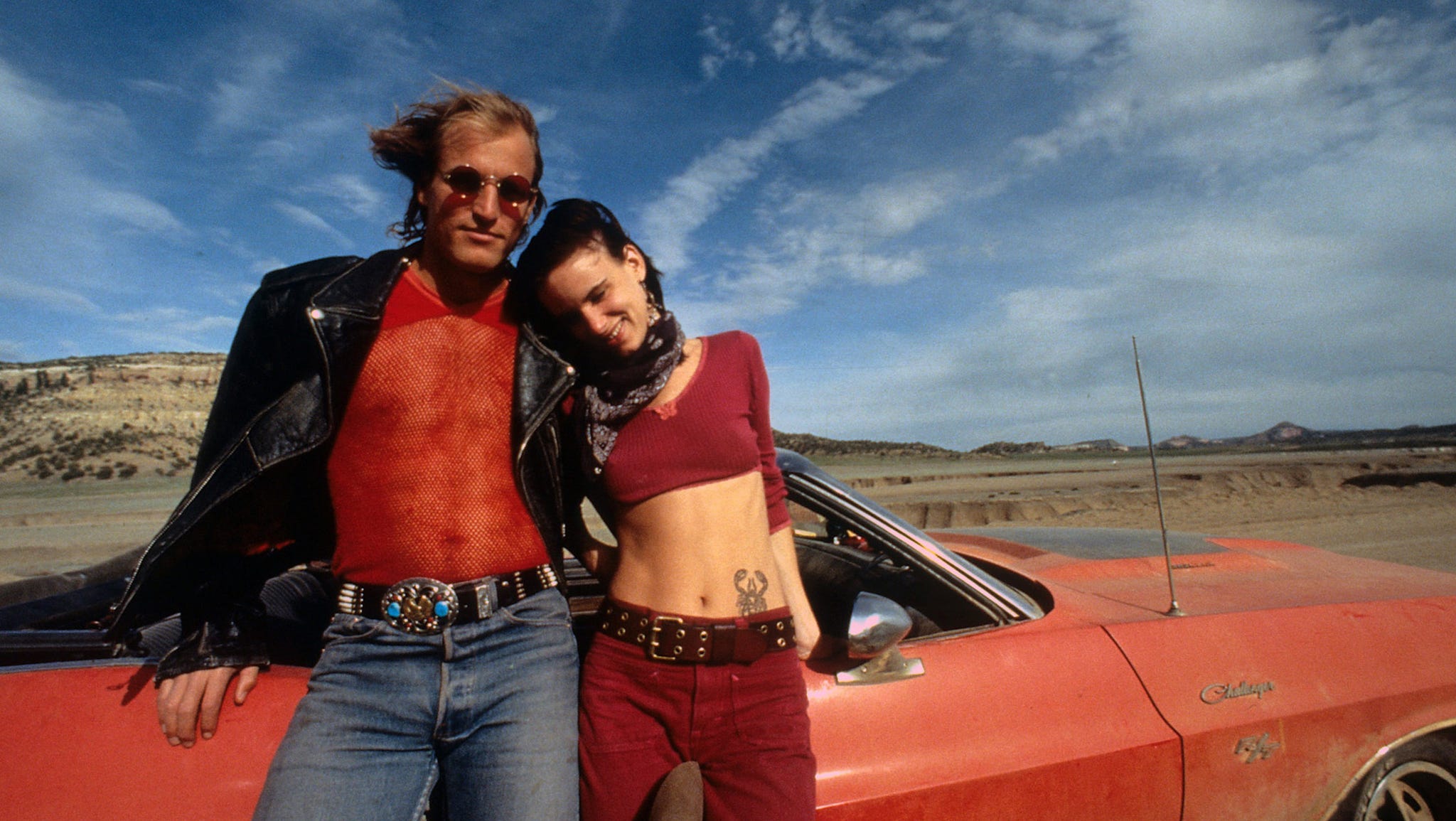
It’s classic ’90s interpreting the ’70s: endless leather, flashes of midriff, a little playfulness.
Stella’s Picks
The Bitter Tears of Petra von Kant (1972)
by Rainer Werner Fassbinder
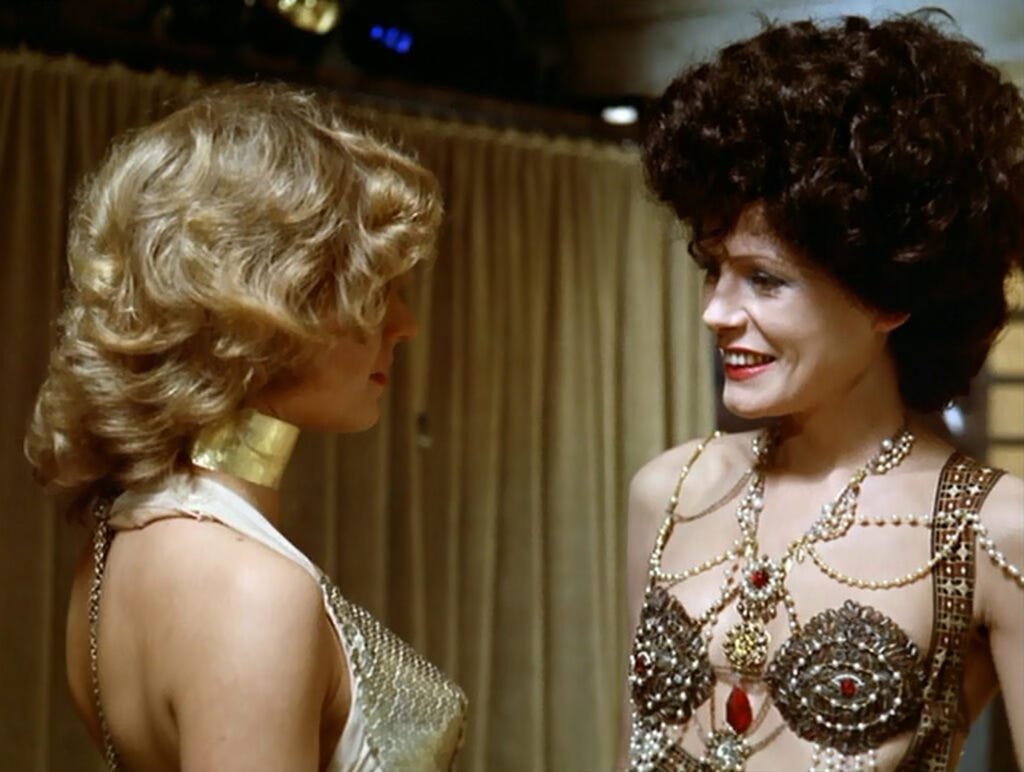
Let’s just say that The Bitter Tears of Petra von Kant was one of the greatest film surprises for me. I always try to watch films without reading a synopsis beforehand, and trailers are a definite no. So I started the film with virtually no expectations.
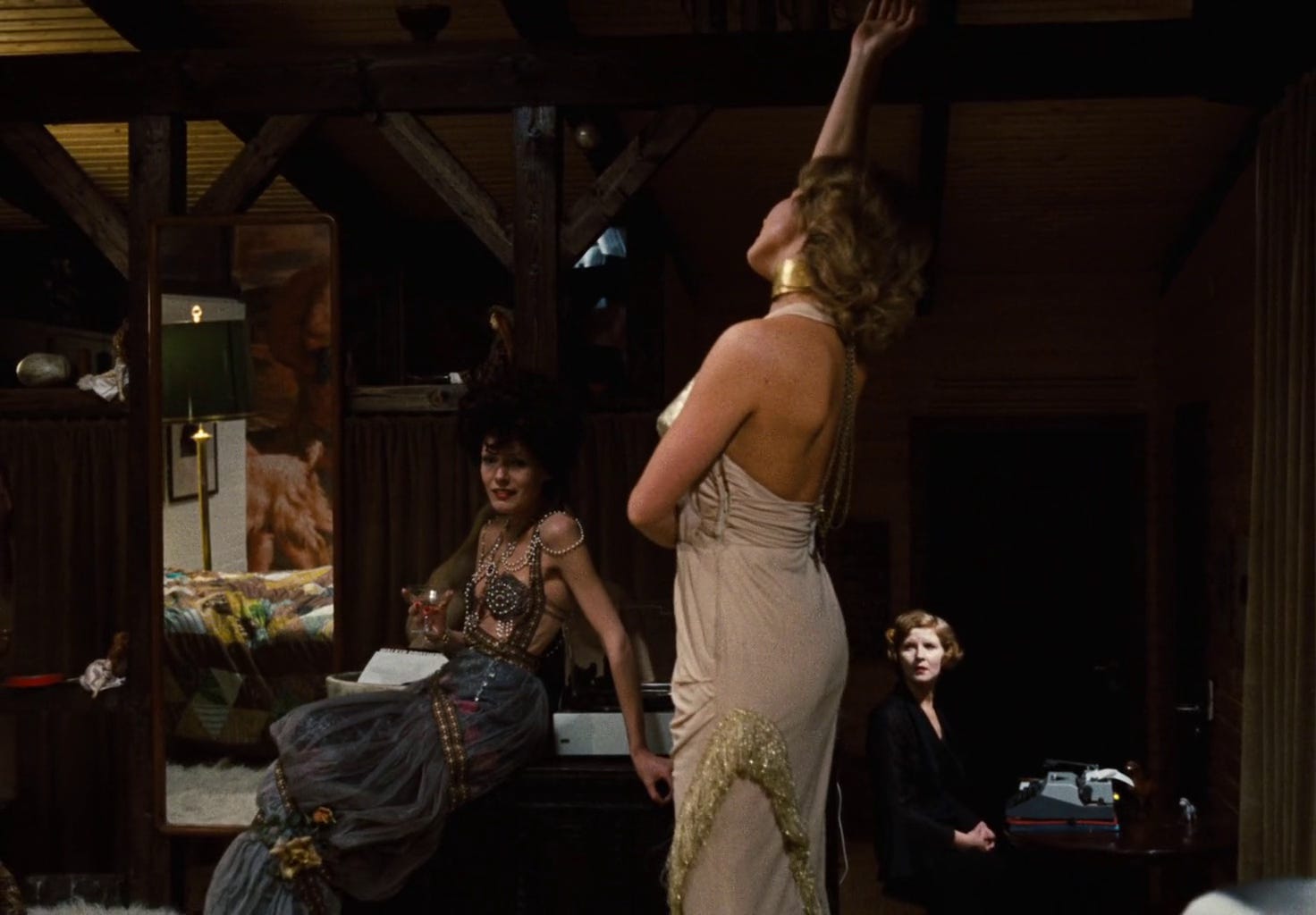
What unfolded was a deep dive into the depths of human loneliness and passion, a disturbing, claustrophobic exploration of jealousy and manipulation. An unforgettable portrait of an imbalanced relationship between a pompous fashion designer (Petra) and a beautiful yet icy ingénue (Karin), set against the silent devotion of Petra’s assistant, Marlene.
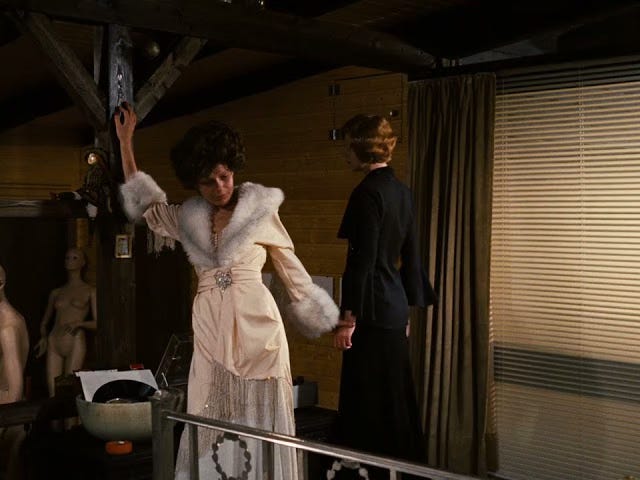
One of the most striking shocks of the film is the way Petra von Kant carries herself within the confines of her home. Her outfits consist of decadent eveningwear and lush loungewear which, extravagant as they are, feel completely natural and perfectly in place. Watching the film, nothing feels forced or theatrical. (I think this is a lost art: costume designers using lavish elements while achieving an effortless result.)
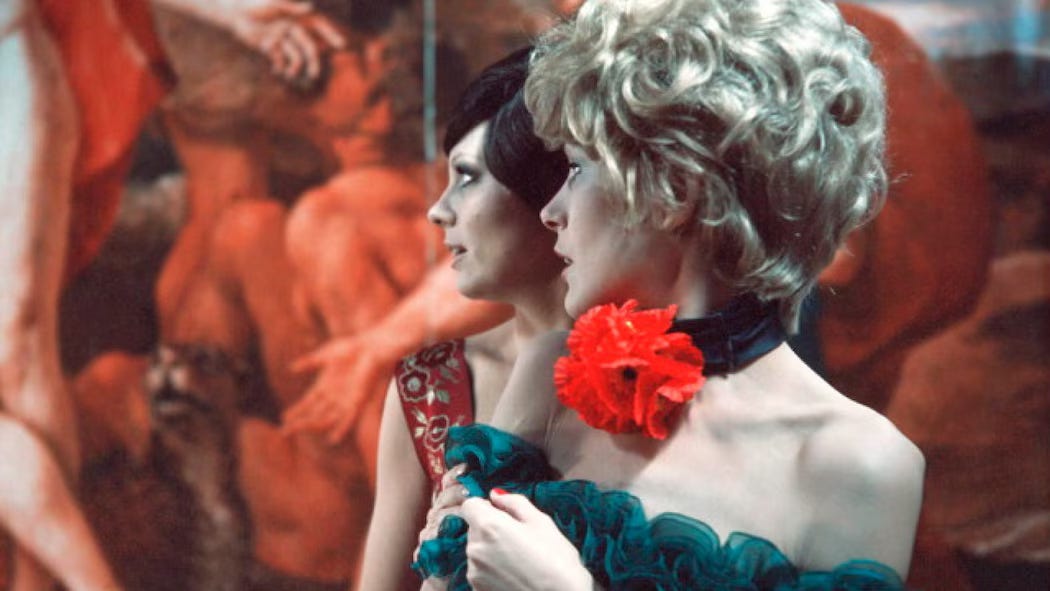
And here, we have it all — 1940’s robes de chambre, Eastern ornamental references, power dressing executed through delicate dresses rather than sharp suits, wigs treated as accessories, flower chokers that never feel tacky or girly, and metallic accents that feel less decorative and more like tools for an imminent battle.
(That scene also permanently altered the way I hear “The Great Pretender” by The Platters, as I suspect it did for everyone else.)
What a Way to Go! (1964)
by J. Lee Thompson
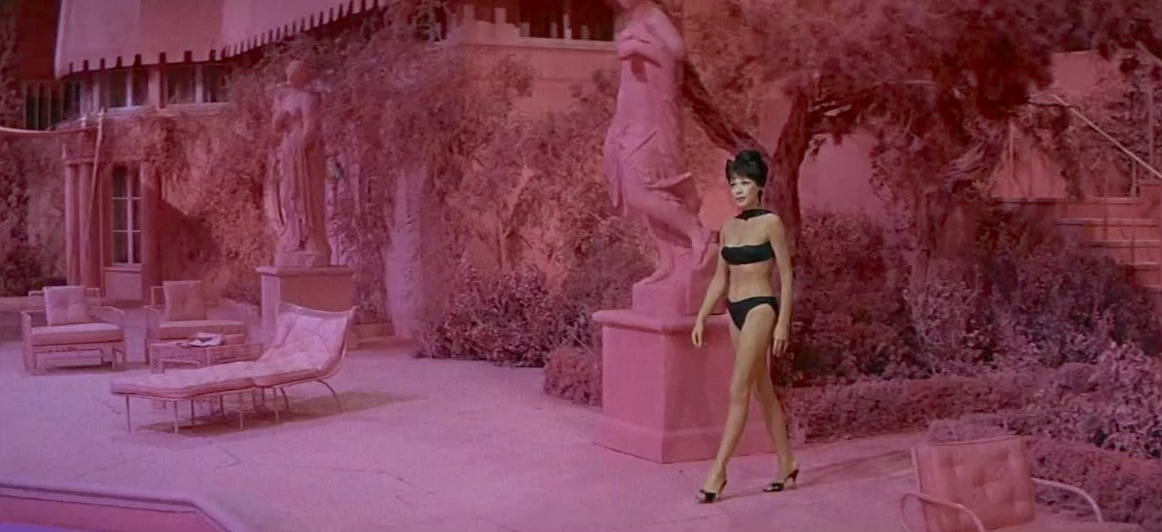
One of the campiest films ever made, truly. I’ll be very honest: I don’t really remember the film’s story. I remember Shirley MacLaine and Robert Mitchum (and Paul Newman and Gene Kelly and Dean Martin!), and the fact that all of them were her husbands.
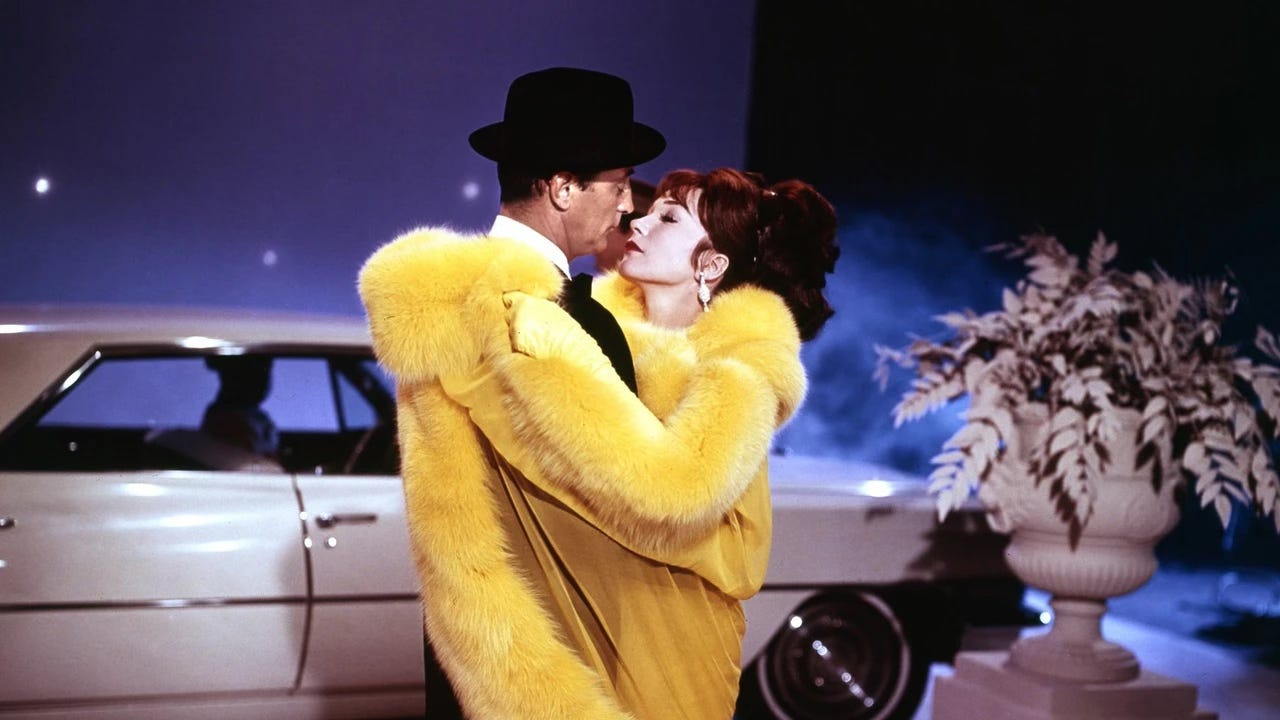
This isn’t a film you remember for its deep meanings, existential questions, or even its simple storyline. What a Way to Go! is a visual masterpiece.
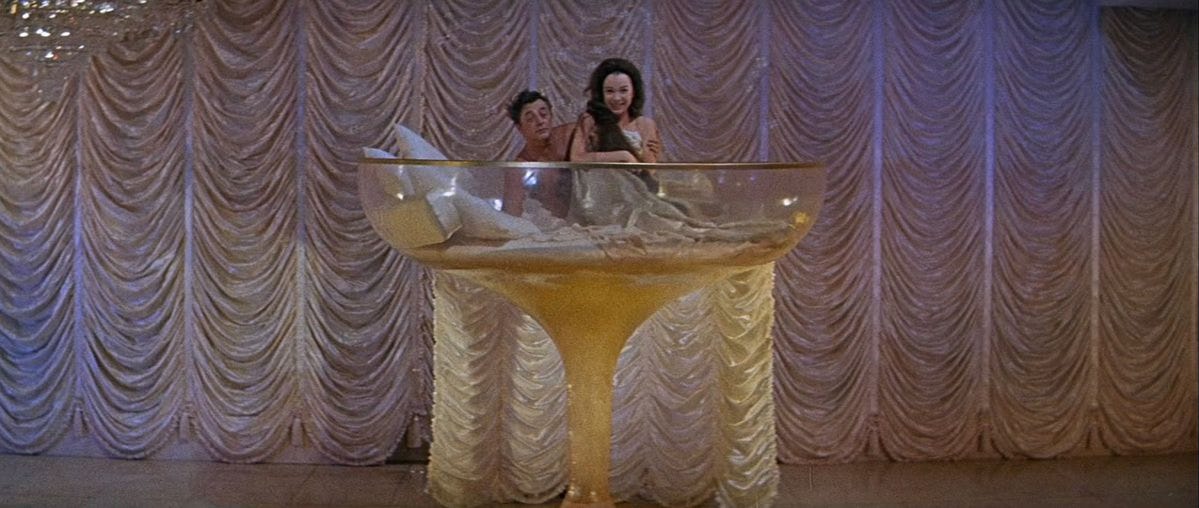
I genuinely believe the real star of this movie isn’t its protagonists, but Edith Head.
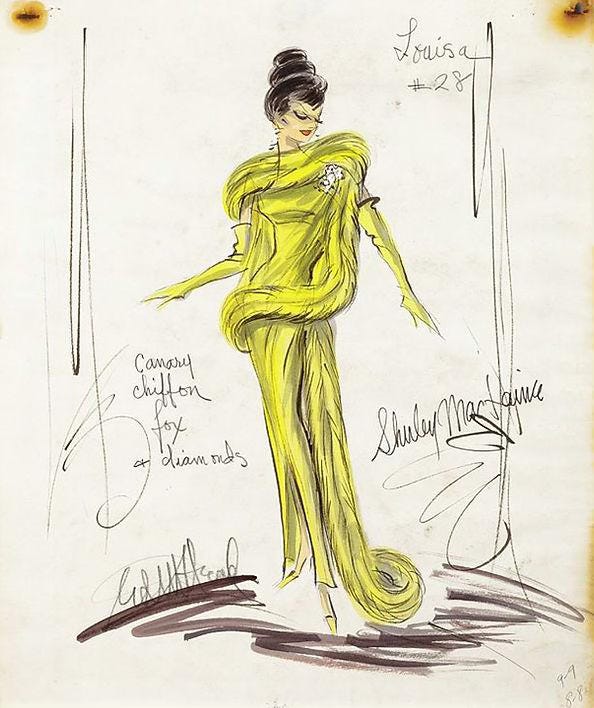
I can’t get enough of the exaggeration and theatricality. My favourite aspect of the character and wardrobe development is how Shirley MacLaine’s style changes to match each husband’s personality and celebrate his talents.
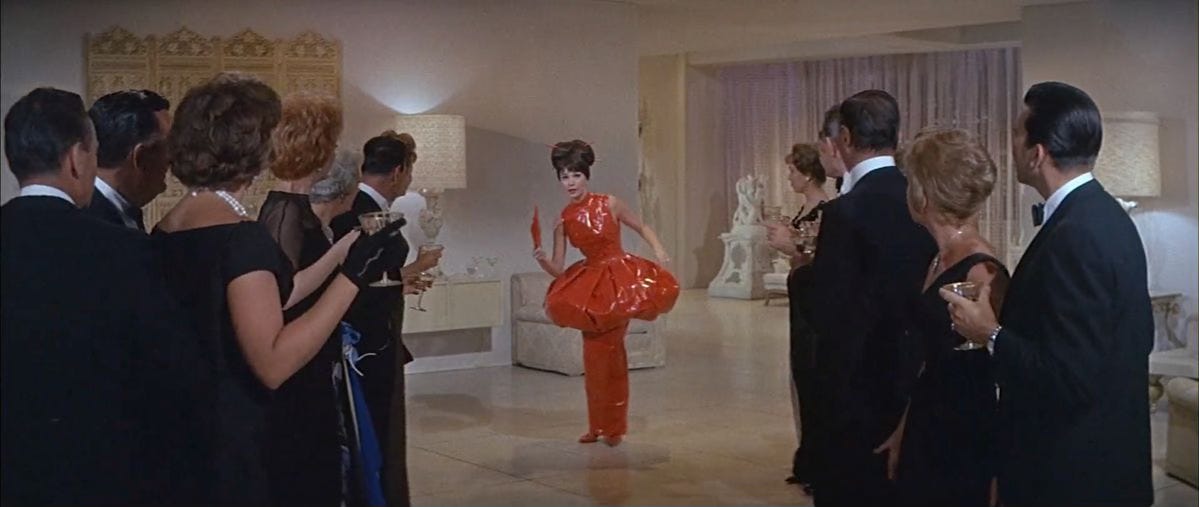
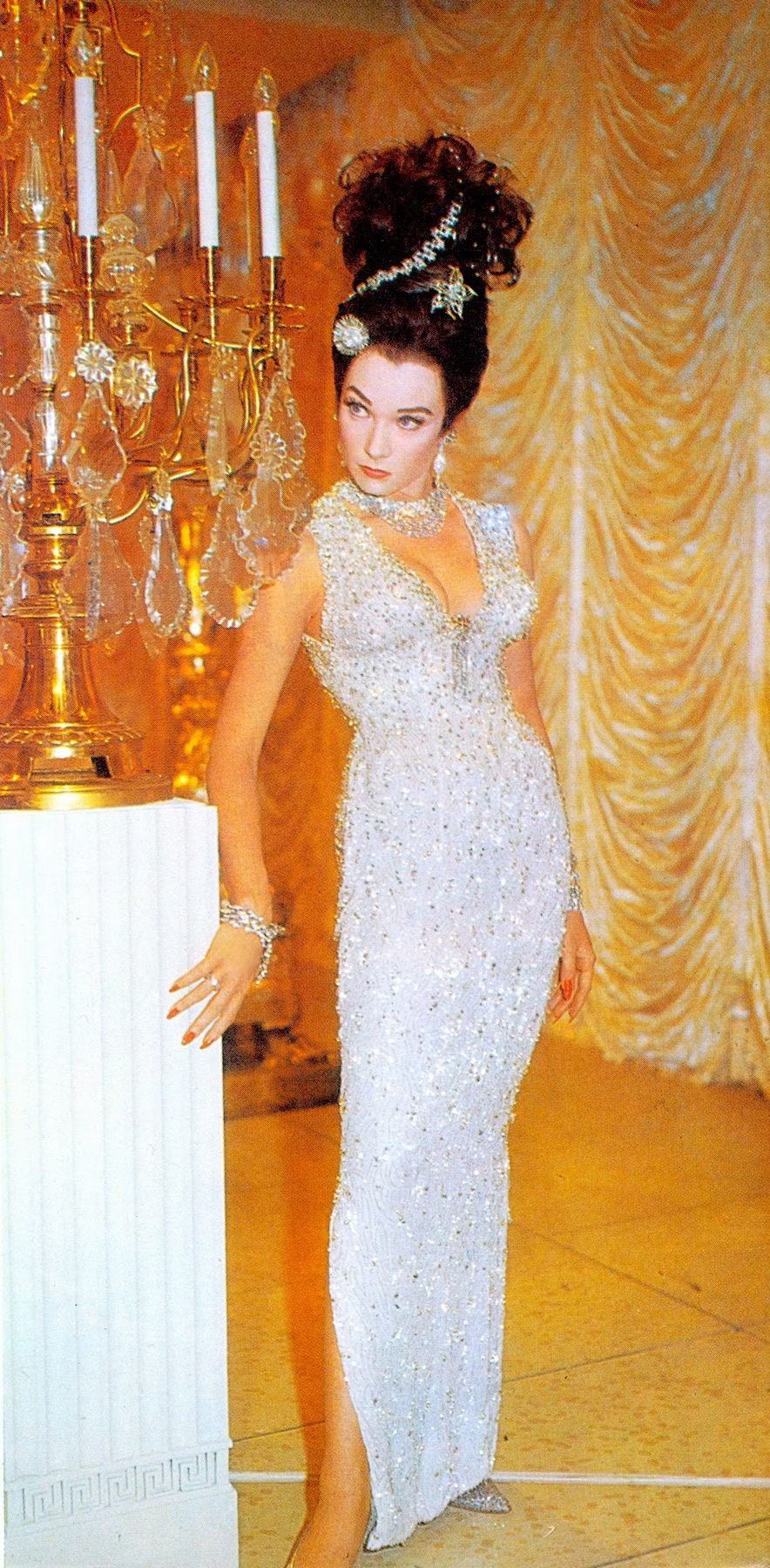
From her “pink era,” to the red latex, geisha-inspired gown, to the diamond dress—and of course the iconic backless dress everyone recognises but can never quite place—she shines so brightly you’re likely to forget Paul Newman’s contribution to the film.
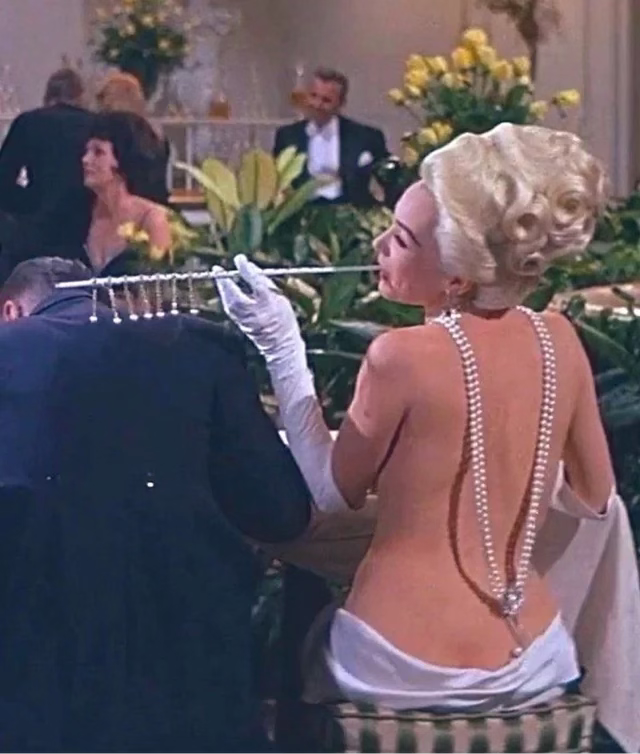
Fun fact: Edith Head’s budget to create only MacLaine’s 72 costumes was a whopping $500,000, while Harry Winston supplied roughly $3.5 million worth of jewellery—more than a small fortune in the 1960s.
Leave Her to Heaven (1945)
by John M. Stahl
If I had to pick a favourite film genre, it would definitely be Film Noir. It combines everything I love: strong, dynamic women dressed impeccably, the 1940s, mystery and suspense. I like to think I’ve seen almost every Film Noir ever made, and I also have my own personal roster of favourite femme fatales (so beloved that they often become the sole reason to watch a film): Barbara Stanwyck, Lizabeth Scott, and of course, Gene Tierney.
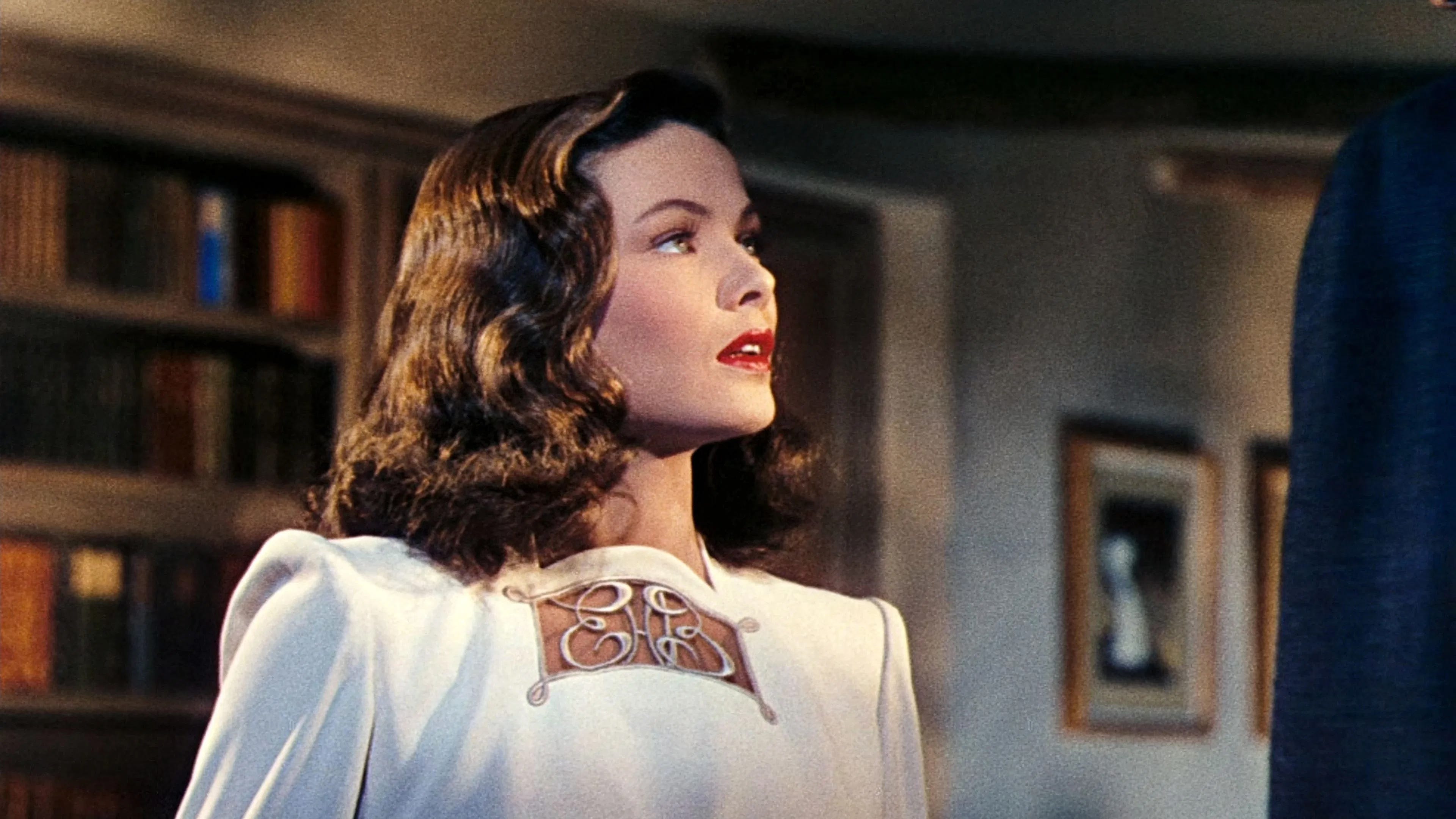
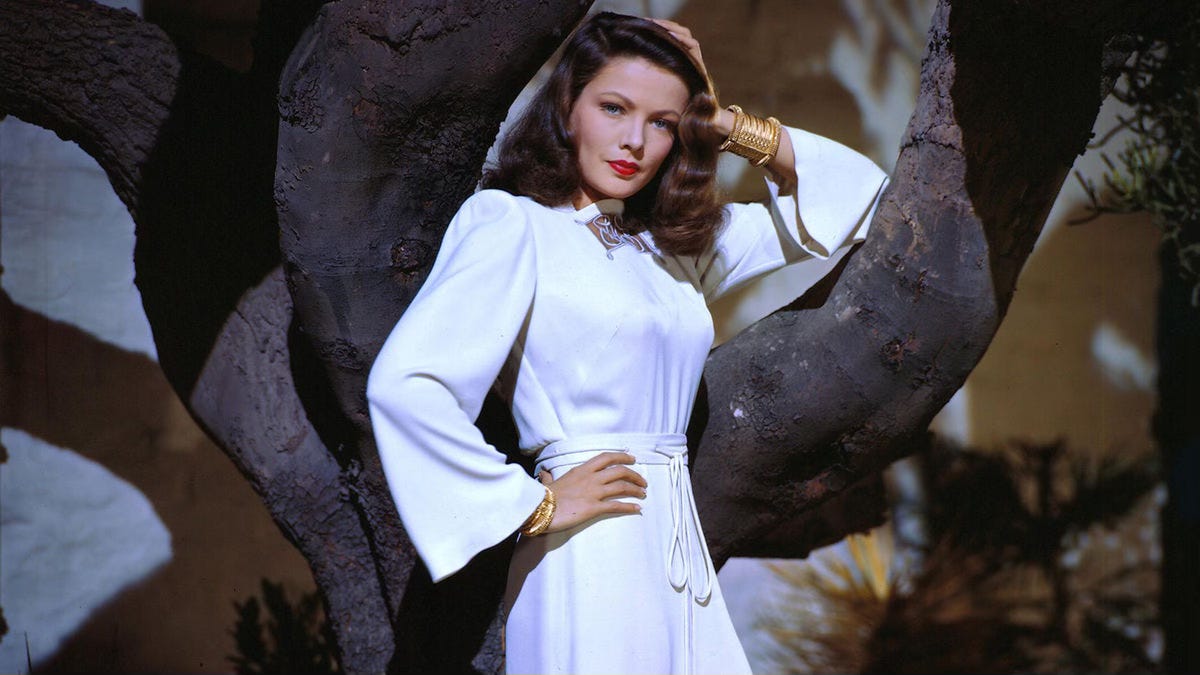
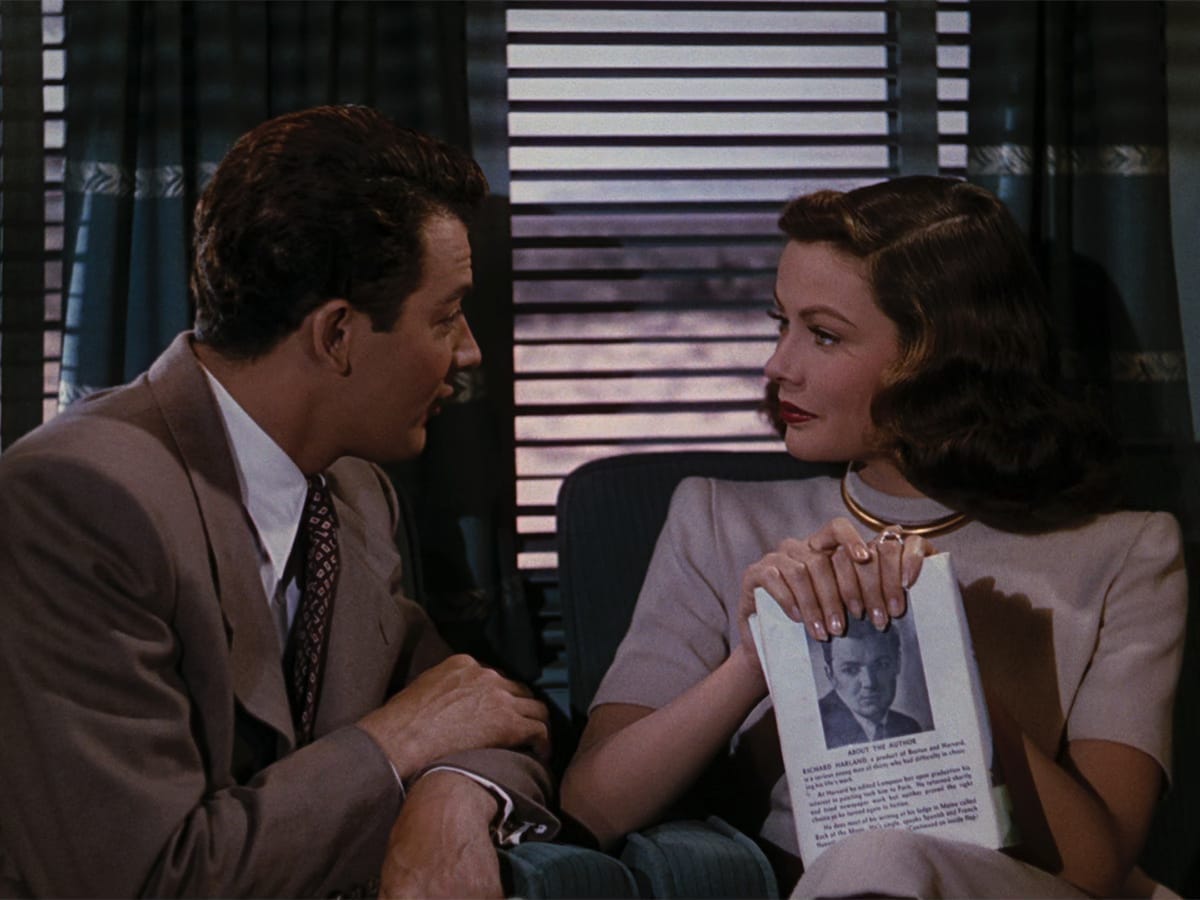
Back to Leave Her to Heaven. The film is striking because it offers all of the above — and yet it’s shot in gleaming Technicolor. This, of course, allows Gene Tierney’s wardrobe to truly pop. Kay Nelson’s costume designs deserve high praise: they are neither loud nor over-the-top, yet they have stayed with me since the first time I saw the film.
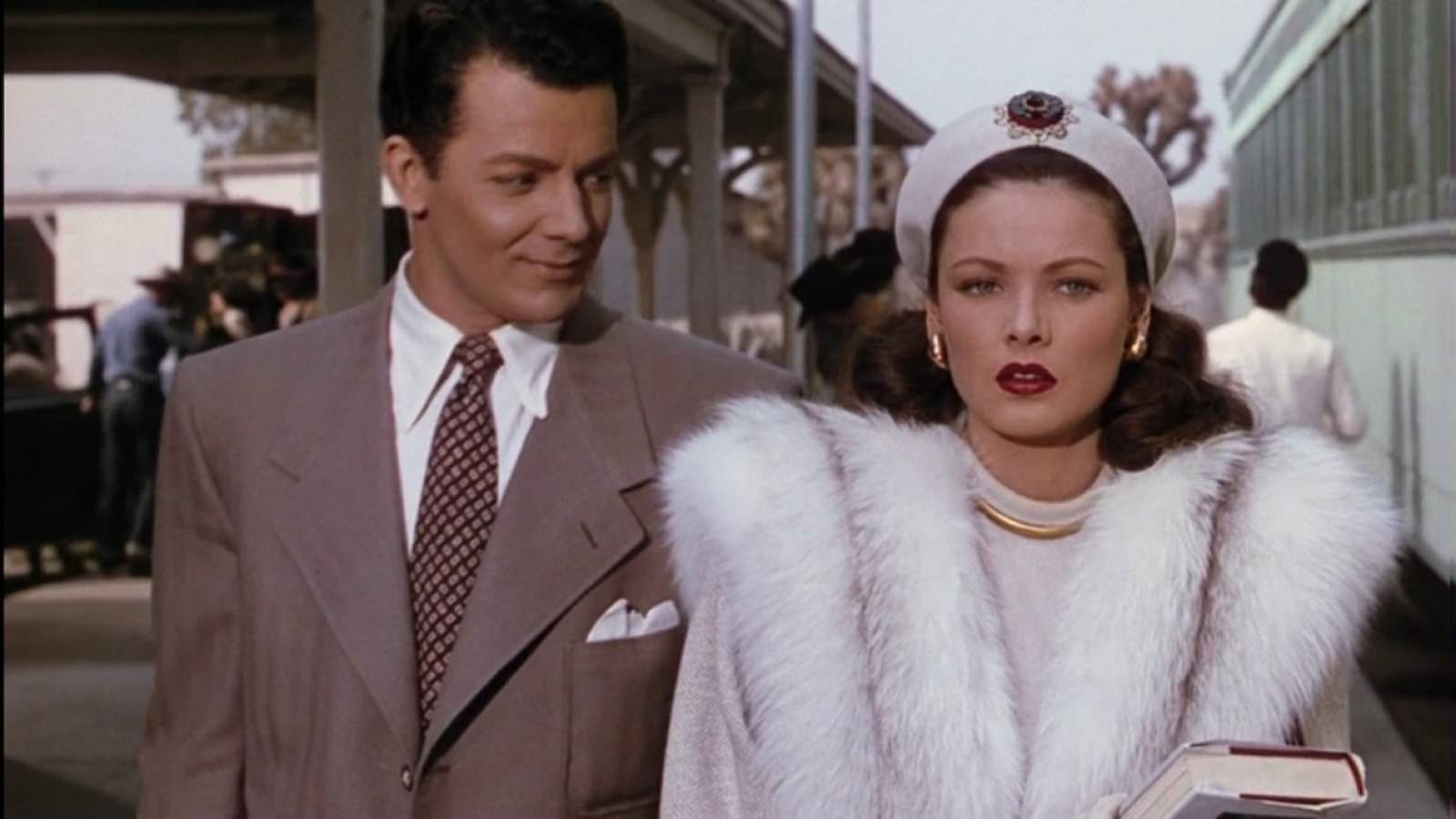
I’m drawn to subtle, almost hidden details in clothing — they’re what catch my eye the most. The brilliance of Ellen Berent’s wardrobe lies in the fact that many pieces are monogrammed with her initials, EB.
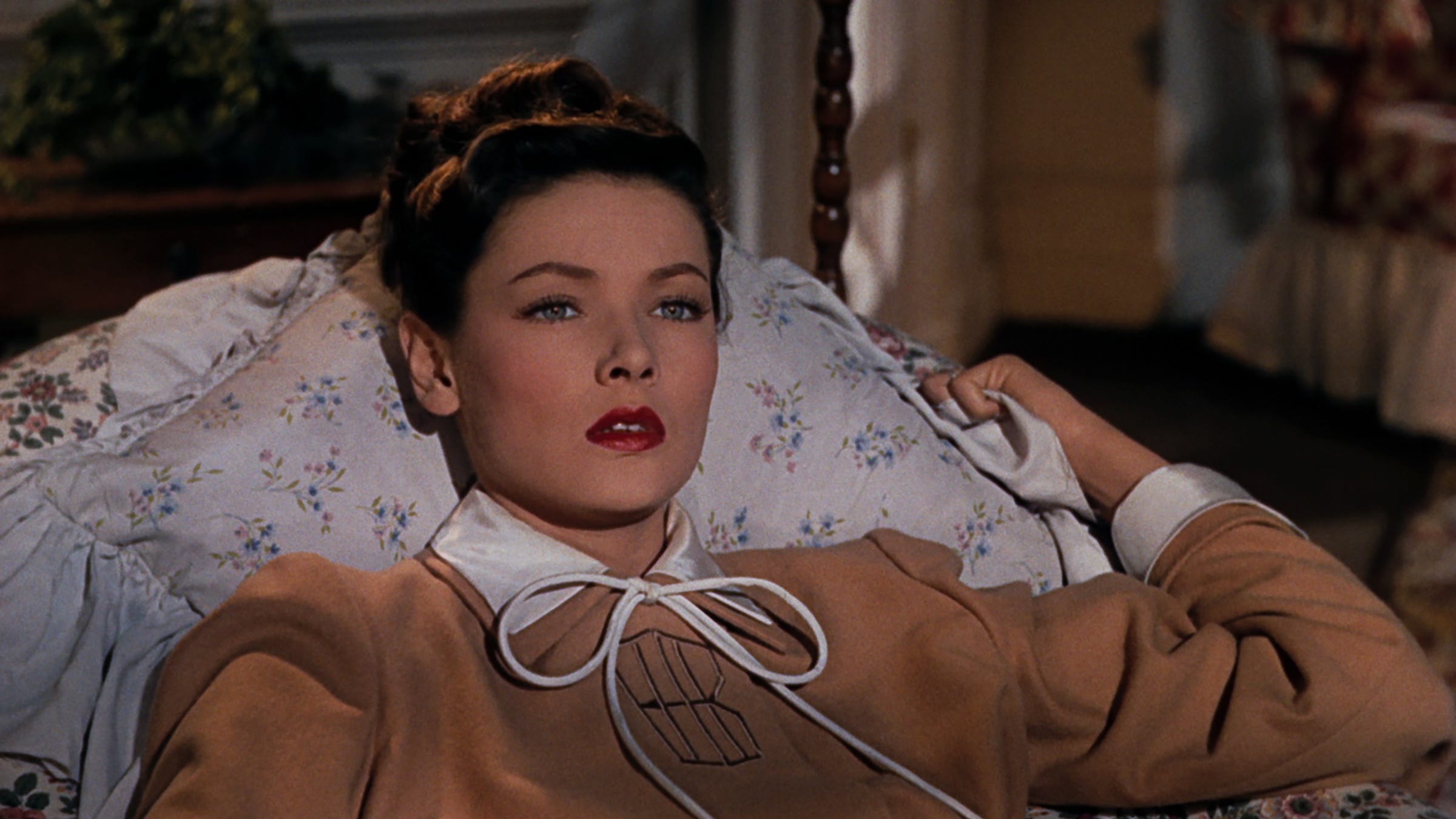
It’s a clever, quietly powerful choice. The predominance of white suggests Tierney’s false purity, executed beautifully through details like contrasting stitching, layered textures, and restrained gold jewellery.
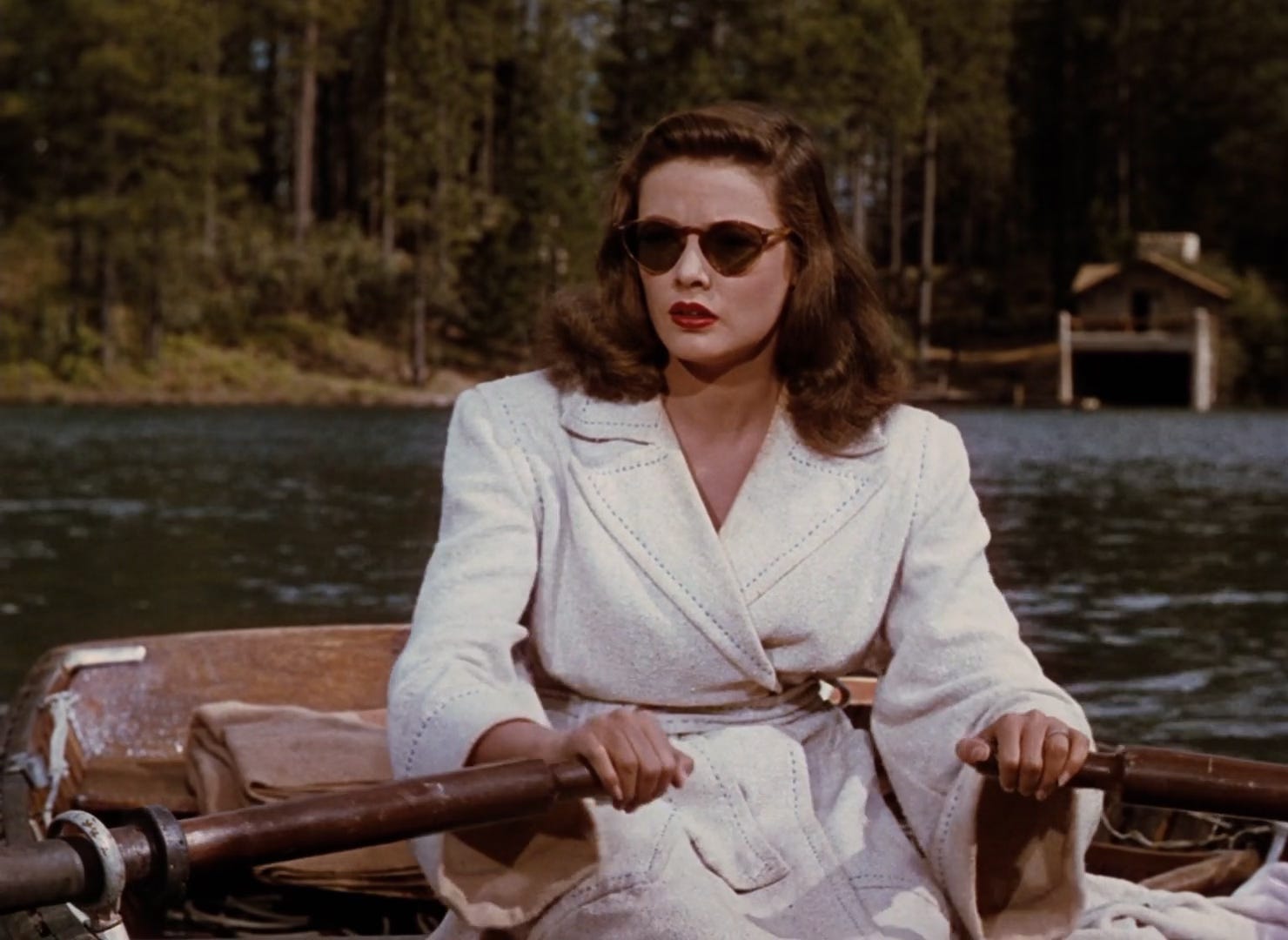
Another Fun Fact: Gene Tierney’s first husband, the legendary designer Oleg Cassini, couldn’t resist stepping in on the costume front. For her role, he created a custom white pantsuit embroidered with her character’s initials. Throughout the film, names appear on objects and garments, subtly reinforcing the characters’ sense of self-possession.
The Birds (1963)
by Alfred Hitchcock
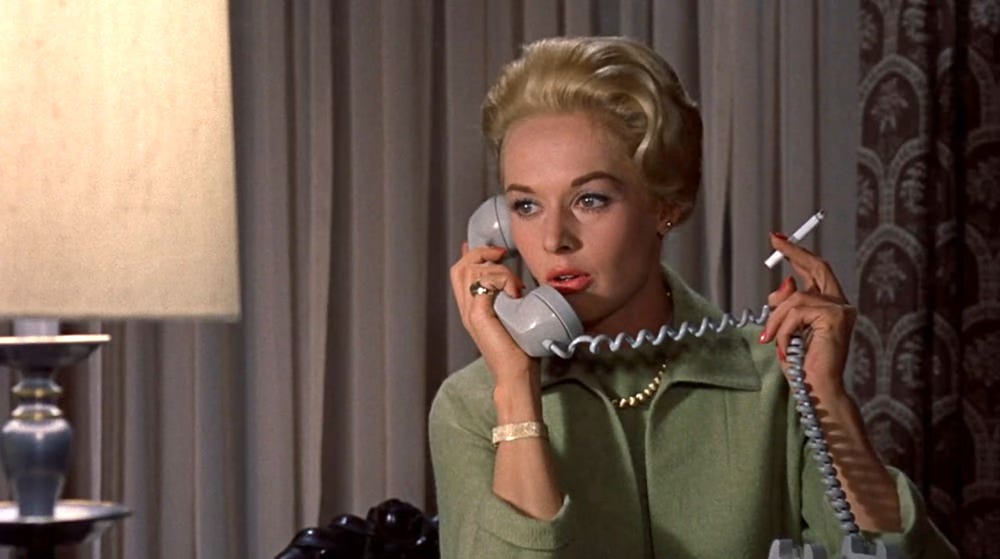
I had to!
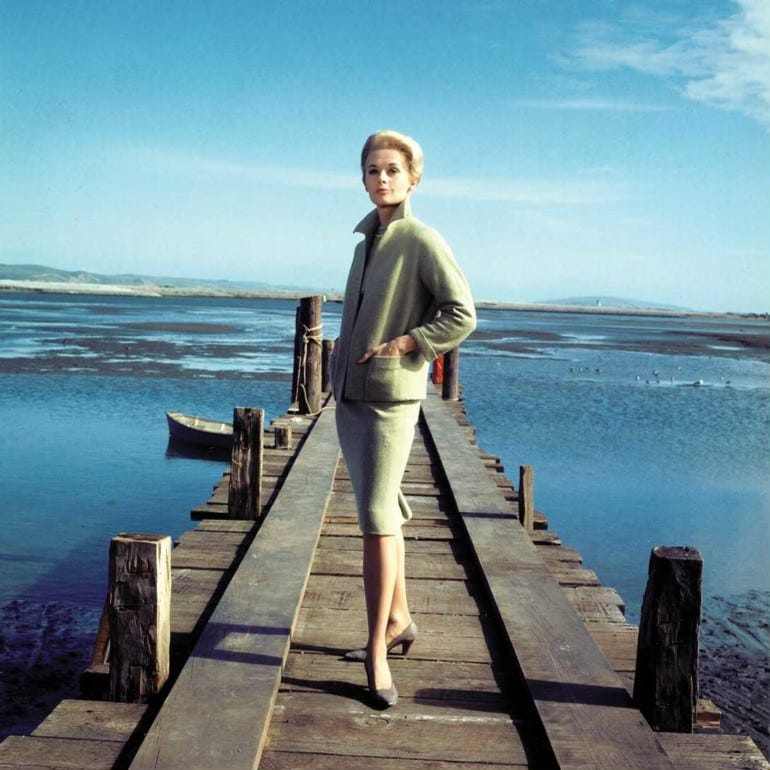
Apparently, a single costume can be enough to make film history. Case in point: Tippi Hedren’s “Eau de Nil” green wool suit in The Birds, designed by — who else — Edith Head. More precisely, it was the result of a close collaboration between two of my favourite figures in cinema: Edith Head and Alfred Hitchcock.
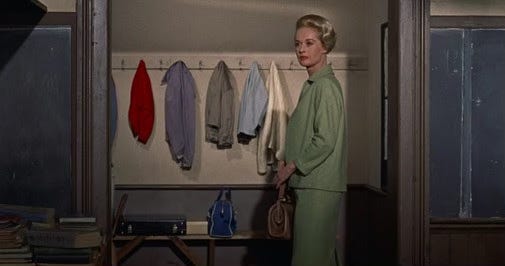
Hitchcock deliberately chose a “pleasing” green to make Melanie stand out against the drab, natural tones of Bodega Bay, immediately marking her as an outsider. The suit functions as a narrative device: it begins immaculate and gradually becomes torn, soiled, and dishevelled, mirroring the erosion of Melanie’s composure and sense of safety.
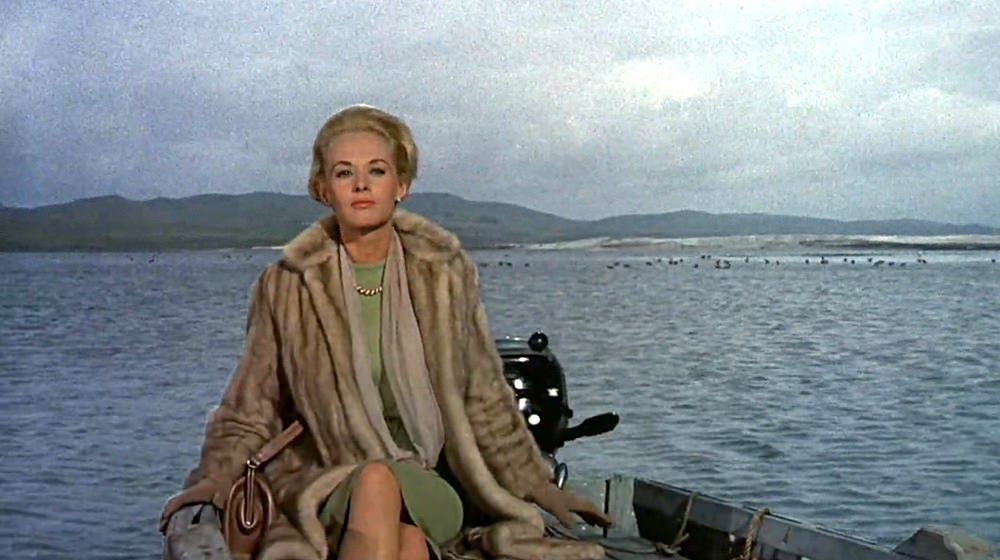
It’s a masterclass in how costume design, at its best, doesn’t simply dress a character, it can also tell the story.
Kisses,
Valisia, Alexandra, Stella